

Paper Stationery Manufacturer Business Plan Template
Paper Stationery Manufacturer Business Plan Template
Notebooks, pads, envelopes and planners are made by converting paper, not by making it. This template is built around that reality: machine time, sheet yield, retailer terms and the compliance paperwork that large buyers ask for.

Download Your Free Paper Stationery Manufacturer Business Plan Template
DIY template with step-by-step instructions. Editable Word doc, yours in 30 seconds.
Machines You Actually Need, in Buying Order
A paper stationery manufacturer is a converter. You buy paper in reels or sheets, and you turn it into a notebook, a pad, an envelope or a planner. Almost every cost, delay and quality complaint in this business traces back to a short list of machines, so the equipment plan is where a good business plan begins. Lenders reading a plan for this sector look for one thing early: does the founder know which machine sets the pace of the factory?
The answer depends on the product. For a loose-leaf pad or exercise book the bottleneck is usually the guillotine and the stitcher. For a casebound notebook it is the casing-in and pressing stage, which cannot be hurried because glue needs dwell time under pressure. For envelopes it is the envelope-making machine itself, which is why the UK market is dominated by a few firms that run dedicated lines. Choose a product family first, then buy in the order below.
The buying sequence
- 1. Programmable guillotine, 76 cm to 92 cm knife: everything starts with accurate sheet and block trimming. Used programmable units from Polar or similar European makers circulate in the secondary market; a new hydraulic industrial cutter is listed at roughly $4,300 to $5,300 at entry level on trade listings, with high-capacity programmable models costing many multiples of that. Budget $5K to $45K depending on age and automation.
- 2. Ruling or printing capability: disc ruling machines print the lines on both sides of the sheet in one pass and remain the cheapest route to lined exercise books. For dot grids, planners and branded pages, a small offset press or a production digital press is more flexible. Most founders outsource this first, then buy a used press once volume justifies it. Budget $0 (outsourced) to $90K.
- 3. Collating and folding: a tabletop folder and a manual collating rack are enough for early volumes. Automated collators only pay back above roughly 3,000 books per day.
- 4. Binding, matched to the product: a semi-automatic spiral or wire-o binder is the cheapest way to produce a professional-looking notebook, and trade sources put semi-automatic cutting plus spiral binding as the sensible starter pairing for small shops. Perfect (glue) binding and thread sewing sit above it, and a semi-automatic casebinding line sits at the top. Budget $3K to $120K.
- 5. Press, punch and drill: a book press and a paper drill for punched, ring-binder-compatible pads. Cheap, but skipping the press means curled covers and returns.
- 6. Wrapping and cartoning: shrink wrap or banding, a carton sealer, and a label printer. Retailers reject cartons that arrive without barcodes and case labels, so this is a revenue machine, not an afterthought.
- 7. Dust extraction and safety guarding: guillotines are among the most hazardous machines on a paper floor. Light curtains, two-hand controls and extraction are inspected items, covered in the licensing section below.
Throughput maths to put in the plan
Lenders and investors want to see a capacity calculation, not an assertion that the factory can serve demand. A workable method is to find the slowest machine, state its realistic output per shift after changeovers, and multiply by working days. A semi-automatic spiral binder with one operator and one feeder typically completes 400 to 700 A5 books per hour on short runs once changeovers are counted, which is 3,200 to 5,600 per eight-hour shift. A single casebinding line run semi-manually with three people is closer to 150 to 300 books per hour.
Those figures are planning estimates from supplier datasheets and trade operators, not guarantees. Run a three-day trial on any machine you are considering and record real output, including set-up time for each new size. Short runs with many sizes lose 25% to 40% of nominal capacity to changeovers, and that loss belongs in the forecast.
Buy used, but test it under load
Secondary-market guillotines and ruling machines are common because paper converters close and consolidate regularly. The risk is not age; the risk is a worn clamp or a drifting back gauge that cuts 0.5 mm off square. Ask for a test cut of 100 sheets, measure the stack top to bottom, and check the safety interlocks work. Include the rigging and transport cost, which can reach 8% to 12% of a heavy machine's price, in the capital budget.
What It Costs to Open the Doors
Avvale's planning model puts launch capital for a paper stationery manufacturer at $85,000 to $520,000 (£67,000 to £411,000). The low end is a lean converter: leased light-industrial space of 2,500 square feet, one cutter, outsourced printing and a spiral binder, producing private-label pads and notebooks for local schools, offices and gift shops. The high end is a branded casebound-notebook maker with its own press, a semi-automatic casebinding line and 6,000 square feet of space. These are model estimates, not quotes, and your own supplier quotes should replace them in a lender-ready plan.
Where the capital goes, lean converter versus branded maker
The line items most plans under-count
Stock tied up in paper. Paper mills and merchants sell in pallet or reel quantities, and a launch order for three paper weights and two board grades can reach $15,000 before you have a single order in hand. Ask merchants about cut-size programmes and split pallets in the first year.
Power and floor loading. Heavy guillotines and presses need three-phase power and a floor that tolerates point loads. A building that looks cheap per square foot can add $10,000 to $25,000 in electrical work. Walk every shortlisted premises with an electrician before signing.
Samples and retailer onboarding. Stationery buyers at national chains and gift distributors expect physical samples, barcodes (GS1 registration), carton labels and sometimes a product safety file. Plan $3,000 to $8,000 for sampling and listing costs per major retail account.
Certification. FSC chain-of-custody certification, discussed under licensing, costs between roughly $3,000 and $15,000 to set up for a single site and $1,500 to $5,000 per year in audit fees according to certification-body fee guidance, and FSC-certified stock carries a 5% to 15% price premium. Group certification, open to firms under 25 full-time-equivalent employees or $10 million in forest-product sales, cuts that bill materially. Source: FSC US, Chain-of-Custody Group Certification.
Funding routes that fit a converter
SBA 7(a) in the United States. Stationery manufacturing sits under NAICS 322230 (Stationery Product Manufacturing), covering envelopes, writing paper, die-cut office supplies, loose-leaf fillers and notebooks. The SBA size standard for that code is 750 employees, so a startup converter is comfortably small, and manufacturers are eligible for 7(a) loans up to $5 million, with equipment, working capital and owner-occupied real estate as eligible uses. Lenders typically ask for 10% to 25% owner equity for a startup and will want machine quotes and a lease or purchase agreement. Source: SamSearch, NAICS 322230.
Start Up Loans in the United Kingdom. The British Business Bank scheme lends £500 to £25,000 per founder, with 12 months of free mentoring. The fixed rate was 6% and moved to 7.5% from 6 April 2026; repayment runs one to five years and the loan is a personal liability. A two-founder team can each apply. Source: ExpertSure, UK Start Up Loans 2026. For a converter this covers a used cutter and a binder, not a casebinding line, so most UK plans pair it with asset finance.
Equipment finance and leasing. Binding and cutting machinery is financed against the asset, usually at 80% to 100% of the purchase price over three to seven years. This preserves cash for paper stock. A plan that shows equipment finance for machines and the SBA or bank loan for working capital reads as better structured than one asking a single lender for everything.
Customer prepayments. Private-label school and corporate-gift programmes sometimes fund a deposit of 30% to 50% on order. If your first customer is a school-supply distributor or a corporate brand, a signed purchase order is the strongest funding document you can attach to any application.
For a deeper look at how lenders assess manufacturing plans, see our research and content package, or compare with the plan for a paper and paperboard manufacturer, which sits upstream of this business.
Paper, Board and Machinery Suppliers to Shortlist
A supplier table in a business plan proves that you have already spoken to the people who will fill your pallets. The names below are established suppliers and brands in the converting trade. They are a starting shortlist for quotes, not endorsements, and availability, minimum order quantities and pricing change often.
| Supplier | Supplies | Why it matters to a converter |
|---|---|---|
| Sappi | Coated and uncoated woodfree paper | Global mill with FSC-certified grades; sells through regional merchants rather than direct to small converters. |
| Domtar | Uncoated freesheet, cut-size and reels (North America) | A large uncoated producer, useful for ruled-paper and exercise-book stock. |
| Mohawk (Strathmore, Superfine) | Premium writing and cover papers | Heritage paper brands used for upscale notebooks and stationery sets. |
| Neenah | Fine and specialty papers | Textured covers and writing stocks for premium and gift lines. |
| GF Smith and James Cropper (UK) | Colour paper and specialty board | Colour range and cover board for design-led UK notebook brands. |
| Antalis (UK and Europe) | Merchant, cut-to-size paper and board | Split-pallet and mixed-order buying while volumes are small. |
| Polar, Challenge Machinery | Guillotines and cutting systems | Programmable cutters, with an active used market in both the United States and Europe. |
| Renz, Akiles, Rilecart | Wire-o, spiral and punching equipment | Entry and mid-range binding machines and consumable wire. |
Reading the competitor set
Founders often benchmark against the wrong companies. Moleskine and Leuchtturm1917 are brand-led businesses where design, distribution and storytelling carry the margin; Leuchtturm1917 is a family-run firm founded in 1917. Clairefontaine, founded in 1858, makes its own paper in France and owns Rhodia, which is a different position again: vertical integration from the mill to the pad. Neither is the business you are building in year one.
In the UK, paper stationery manufacturing is a concentrated trade. IBISWorld's UK industry profile lists the biggest players as The Encore Group (Envelopes and Packaging) Ltd, Adare SEC Ltd and Bong UK Ltd, the latter an envelope maker. The practical lesson for a new converter is that scale players win on envelopes and commodity stationery, so the openings are short-run, customised, personalised and gift-grade work where their lines are not set up to compete. Source: IBISWorld, Paper Stationery Manufacturing in the UK.
A good plan names three to five direct rivals in your target price band, states each one's price per unit at the retailer, and explains in one paragraph why a buyer would add you rather than replace them. Add a column for minimum order quantity, because a buyer's real choice is often between a major mill-brand notebook at a 5,000-unit minimum and your 500-unit private-label run.
If your model leans toward selling to retailers rather than making, compare it with the plan for a stationery wholesaler, which has a very different capital and margin structure.
Permits, Certifications and Product Rules by Jurisdiction
Making notebooks does not need a special manufacturing licence in most places, which surprises first-time founders. What you do need is a stack of smaller obligations: business registration, premises and fire rules, machine safety, product-safety paperwork where children are the end user, and a growing set of environmental and sourcing rules. Retail buyers add their own requirements on top. The table below separates what the law demands from what customers demand.
United States
- Business formation and EIN: state registration plus a federal employer identification number. Cost varies by state, typically $50 to $500, and takes days.
- Machine guarding (OSHA, 29 CFR 1910 Subpart O): guillotine cutters and presses fall under machinery-guarding standards. Light curtains, two-hand controls and lockout/tagout procedures are inspected items. Budget $2,000 to $8,000 for retrofitted guarding on used equipment.
- Children's products (CPSIA): if your notebooks, stickers or activity pads are designed primarily for children aged 12 and under, you need third-party testing at a CPSC-accepted laboratory and a Children's Product Certificate. Lead in accessible substrate materials is limited to 100 ppm and lead in surface coatings to 90 ppm. Educational materials with a functional purpose are treated differently from toys, so confirm how your product is classified before testing. Source: Eurofins, CPSIA Children's Product Certificate guide.
- State rules and claims: California Proposition 65 warnings can apply to inks, coatings and imported components. Any "recycled" or "eco" claims on packaging fall under the FTC Green Guides, so keep mill certificates for every recycled-content claim you print.
- Local zoning and fire code: paper is a combustible load. Light-industrial zoning, sprinkler requirements and a fire marshal's inspection are normal, and insurers will ask for them.
United Kingdom
- Registration and tax: Companies House incorporation (£50 online) and HMRC registration; VAT registration once taxable turnover passes the threshold.
- Machine safety: the Provision and Use of Work Equipment Regulations 1998 and the Health and Safety at Work etc. Act 1974 put the duty on the employer to guard cutters and presses, and the HSE inspects print and paper converting sites. A written risk assessment per machine is expected.
- General Product Safety and children's goods: consumer goods must be safe under the General Product Safety Regulations 2005; products for children also come under the UK toy safety regime if they are designed as play items. A stationery pad is generally not a toy, but a novelty set with small parts can be.
- Packaging Extended Producer Responsibility: since 1 January 2025 producers pay the full net cost of collecting and recycling packaging they supply. Small producers, with £1 million to £2 million turnover and more than 25 tonnes of packaging a year, or turnover above £1 million and 25 to 50 tonnes, report once a year in April but do not pay disposal fees or buy PRNs. Larger producers face fees. Source: 360 Environmental, EPR for packaging.
- Start Up Loan mentoring: not a legal duty, but the 12 months of mentoring attached to the loan is a practical way to get a reviewer for your plan before submission.
European Union (for export or an EU site)
- EU Deforestation Regulation (EUDR): application was postponed to 30 December 2026 for large and medium operators and June 2027 for small and micro operators, and the December 2025 amendment removed printed products under the chapter 49 heading from scope. Paper goods under chapter 48 and pulp remain relevant, so check your product's customs code against the current Annex I list and plan to collect geolocation data for fibre sources. Source: Assent, EUDR Update 2026.
- REACH and food-contact rules: inks, adhesives and coatings on children's stationery fall under REACH restricted-substance lists. Stationery with food contact, such as a lunch-box notepad, has separate rules.
- CE marking: only if the product counts as a toy or electrical item. Plain paper goods generally do not need it.
What retail buyers will ask for even though the law does not
The most common buyer requirement is FSC or PEFC chain-of-custody certification, because national chains and school-supply distributors report on their own certified-fibre percentages. FSC certificates run for five years with annual surveillance audits. If you buy certified paper but do not hold a certificate of your own, you can usually not print the FSC logo on the product, which is the point a buyer cares about. A typical request list from a distributor also includes a product liability insurance certificate (often $1 million minimum), a GS1 barcode registration, a supplier code of conduct signature and a carton marking specification.
Put certificate timelines in the plan. Group FSC certification can take six to twelve weeks; a CPSIA test cycle takes two to four weeks plus any re-tests. A launch calendar that ignores them will push your first retail shipment past the back-to-school window, which drives a large part of annual demand.
How the Money Is Made: Units, Margins and Customers
Paper stationery manufacturers sell on three different models, and the plan has to pick one as the lead. They carry very different margins and cash cycles, and mixing them without saying so is the commonest reason a forecast fails a lender's stress test.
| Model | Who buys | Gross margin | Cash cycle |
|---|---|---|---|
| Private-label and contract (exercise books, pads, envelopes) | School-supply distributors, office-product wholesalers, corporate buyers | 18% to 28% | 45 to 75 days; large runs |
| Branded wholesale (casebound notebooks, planners) | Independent gift shops, museum stores, chains, online marketplaces | 45% to 58% | 30 to 60 days; sales-rep commission |
| Custom and promotional (corporate-branded, wedding, event) | Companies, agencies, venues, individuals | 35% to 50% | Deposit up front; short runs |
Trade-published margin guidance for stationery businesses is broad because it mixes retailers and makers: retail stationery is often marked up 2.5 to 3 times on cost, while wholesale stationery runs closer to 5% to 10% net. Both figures are consistent with the table above once overhead is deducted from gross margin. Source: Step by Step Business, Start a Stationery Business.
Worked unit economics: an A5 casebound dotted notebook
This example is an Avvale model, built from typical trade inputs, and shows how a branded notebook earns its margin. Costs are for a run of 3,000 units, 192 pages (96 leaves) of 100 gsm uncoated paper:
- Text paper: 96 leaves of A5 equals 48 A4 sheets, about 0.30 kg at 100 gsm. At $1.50 per kg that is $0.45.
- Cover board and wrap: 2 mm greyboard plus wrapped cover material, $0.55.
- Endpapers, thread, headband, ribbon, elastic: $0.30.
- Ruling or one-colour dot-grid printing: $0.20.
- Labour, direct (casing-in, pressing, inspection): $0.65.
- Carton share and labels: $0.12.
Direct cost per unit is $2.27. A wholesale price of $5.60 gives a gross margin of 59% before overhead; the retailer then marks it up to $13 to $15. Once you add freight to the customer (about 8% of sales), sales commission (10% to 12%), and a share of rent, machine depreciation and salaries, a realistic net margin is 8% to 12% at full utilisation, matching Avvale's benchmark band for this industry. At 55% machine utilisation, the same product loses money, which is why the capacity plan matters.
Worked unit economics: an A4 exercise book for a school distributor
Run of 100,000 units, 40 leaves of 70 gsm paper with a 200 gsm cover, stapled and ruled: text paper $0.19, cover $0.04, ruling and print $0.06, direct labour $0.09, packaging $0.03. Direct cost is $0.41 against a distributor price of $0.55, a gross margin of 25%. Net margin after overhead is typically 3% to 6%. The business works only if you have tight yield control, because a 3% paper wastage swing eats more than half the net profit. These contracts are won on price per unit and delivery date, which is why they are cash-hungry and why a plan should show a customer concentration limit (no single customer above 35% of revenue).
Revenue drivers to forecast, in order
- Seasonality: back-to-school and the Q4 gifting and diary window carry a disproportionate share of orders. In a forecast, split revenue monthly and show the stock build before each peak.
- Average order size: a gift shop orders 24 to 144 units; a distributor orders pallets. Forecast by customer type rather than a blended average.
- Repeat rate: notebook ranges are reordered by colour and size, so repeat revenue often reaches 60% to 70% of branded wholesale sales by the second year.
- Price changes and paper costs: paper is typically 30% to 45% of direct cost. Include a scenario with a 10% paper price increase.
- Direct-to-consumer: a Shopify or Etsy channel for personalised books carries a 55% to 70% gross margin but small volume, and works as a brand-builder rather than a core engine.
Our bespoke business plan includes a monthly unit-economics model per product line, which is what manufacturing lenders ask to see.
Market Size and Demand: What the Figures Say
Market-research firms disagree on the size of the stationery category because they draw boundaries differently, so a lender-ready plan quotes a range and names its source. For the paper segment, one 2025 report puts the global paper stationery market at $94.6 billion, rising to $145.2 billion by 2034, a compound annual growth rate of 4.9%. Source: Verified Market Reports, Paper Stationery Market. The wider stationery products category, which includes writing instruments and office supplies, is estimated at $117.2 billion in 2025, growing at 4.2% between 2026 and 2035. Source: Global Market Insights, Stationery Products Market.
Paper stationery, 2025 and 2034
The UK picture
UK paper stationery manufacturing is a small, concentrated industry. IBISWorld puts manufacturer sales at £362.1 million in 2025, and Statista reported about £365.5 million in 2022, so the domestic market is flat in nominal terms and shrinking in real terms. Meanwhile, UK stationery retail is estimated at more than £1.2 billion with about 1,500 retail businesses, which means a lot of small buyers for short-run suppliers. The commercial reading is clear: a UK entrant does not grow by taking commodity volume from Encore or Adare; it grows through design-led ranges, local-made positioning, personalisation and export. Sources: Statista, UK paper stationery manufacturers' sales and Suman Bros, UK stationery market 2025.
Demand drivers worth a paragraph in the plan
Journalling and analogue planning. Dotted notebooks, bullet-journal formats and undated planners grew as a response to screen fatigue, and made brands such as Leuchtturm1917 and Moleskine reference points for buyers. The pull is toward format variety (A5, B6, pocket), paper quality that handles fountain pens, and personalisation.
Education demand. School and university term dates set the order calendar. Population-driven demand in Asia-Pacific, particularly India, favours low-cost sustainable notebooks, while North America and Europe lean toward recycled-content and certified-fibre requirements driven by procurement policies.
Sustainability. Eco-friendly stationery is cited as a main growth driver in the global reports above, and the recycled paper market is estimated at about $150 billion in 2025 growing at 5% a year. For a small converter, the practical implication is simple: recycled and certified stock is a sales feature, and a buyer will pay 5% to 15% extra for it only if the claim is documented.
Corporate gifting and events. Branded notebooks remain a staple of corporate welcome packs and conference bags. This is a short-run market where converters with fast turnaround and good proofing win, and it is the easiest first revenue stream for a new maker.
Threats. Imported product from Asia sets the price ceiling for commodity items, digital note-taking cuts demand for diaries and calendars, and paper price volatility squeezes small converters first because they buy in small lots. A plan that acknowledges these risks, and shows pricing floors and supplier alternatives, will earn more trust than one that avoids them.
Industry-specific structure. Write it yourself with expert guidance.
Download TemplateWe handle the research & narrative: investor-ready copy in 3–4 days
Get StartedFull plan + 5-year forecast, written by our team in 10–14 days
Book a CallQuestions Founders Ask Before They Buy a Machine
How do I start a notebook manufacturing business?
Pick a product and a customer first: a plain exercise book for a school distributor and a casebound gift notebook are separate businesses. Then confirm demand by getting two or three written letters of intent from buyers, because trade sources advise starting by asking local stationers what they sell monthly and which brands lead. Next, price the machine route: a semi-automatic cutter and a spiral binder is the cheapest professional start. Write the plan, apply for funding, and run a pilot batch of 500 to 1,000 units for sales samples before you commit to the larger machines.
What machines are needed to make notebooks?
At minimum: a paper cutter or guillotine, a ruling or printing method, a collating step, a binding machine (spiral, wire-o, stitch or perfect binding), a press or punch, and a wrapping and cartoning station. Entry-level semi-automatic equipment in trade guides starts in the low thousands of dollars per machine, with automatic cutters and perfect binders priced several times higher. The full buying order is in the machine checklist above.
How much does it cost to start a paper stationery manufacturing business?
Avvale's model gives a range of $85,000 to $520,000. Online guides quoting $2,200 to $15,000 are describing a different business: a designer who sells stationery printed by someone else, with no factory floor. Be clear in your plan which of the two you are, because lenders will ask.
Is stationery manufacturing profitable?
It can be, but the margin depends on your model rather than on the category. Commodity exercise books yield 3% to 6% net after overhead. Branded casebound notebooks and custom work yield 8% to 12% at healthy machine utilisation. Wholesale stationery margins are often quoted in the 5% to 10% range, which fits the middle of that spread.
Do I need FSC certification to sell stationery?
The law does not require it, but many buyers do. Large retailers and school-supply contracts often require certified fibre or at least a documented sourcing policy. Group certification reduces the cost for firms with fewer than 25 full-time-equivalent employees or under $10 million in annual forest-product sales.
Break-Even Calculator for a Paper Converter
Enter your own numbers. The calculator treats your fixed costs as monthly and uses the contribution margin per unit to find the volume at which the factory stops losing money. It is a planning aid, not a forecast; use it to test whether a lender-ready plan is plausible before you commit to a machine.
With the default inputs, the model needs about 10,600 branded notebooks a month to break even, which is why branded wholesale plans depend on three to five anchor accounts and a reorder rhythm, not a launch spike.
Sample Plan Extract: Hollis Bindery & Paper Works
The extract below shows the voice and level of detail the template teaches. Hollis Bindery & Paper Works is an illustrative composite business, not a real company. Its numbers are internally consistent and were built with the same unit economics used earlier on this page.
Hollis Bindery & Paper Works, Greenville, South Carolina
Hollis Bindery & Paper Works will manufacture casebound and wire-o notebooks, undated planners and custom corporate-gift books from a 4,500 square foot light-industrial unit. The company serves three customer groups: independent gift and museum shops in the Southeast (branded line), regional corporate buyers (custom line), and two school-supply distributors (private-label line, capped at 30% of revenue).
The founder spent eleven years as a production supervisor at a commercial printer and holds relationships with four of the distributors who will place first orders. The company seeks $240,000: an SBA 7(a) loan of $180,000 and $60,000 of owner equity, including a refurbished programmable guillotine contributed at appraised value. Funds buy a semi-automatic casebinding line, a wire-o binder, certified paper stock for 90 days and six months of working capital.
Year 1 revenue is forecast at $612,000 with a blended contribution margin of 37%, producing an operating loss of $62,000 as volume ramps. Year 2 revenue is $1.14 million with positive operating income of $133,000. Break-even is reached in month 14.
The numbers behind the extract
- Fixed costs: $24,000 per month, made up of $6,000 rent, $14,000 payroll for four staff, and $4,000 for insurance, utilities, software and maintenance.
- Break-even revenue: $24,000 divided by a 37% contribution margin gives $64,900 per month, or about $778,000 a year.
- Revenue mix by year 2: branded wholesale 46%, custom and corporate 31%, private label 23%.
- Debt service: $180,000 over ten years at an SBA rate near 10% is about $2,380 per month, so the plan carries a debt-service coverage ratio of 1.4 or higher by month 18.
- Capacity check: the slowest stage, casing-in and pressing, handles 180 books an hour; at one shift that is about 31,000 units a month, giving 20% headroom over year-2 demand.
Lenders read the capacity check and the customer-concentration cap more closely than the narrative. Both signal a founder who has run a floor before, which is the credential a loan officer weighs most for a manufacturing startup.
Inside the Template: What You Fill In and Where the Numbers Go
The paper stationery manufacturer template follows the order lenders read a plan, and each section carries a prompt written for converters rather than a generic startup. These are the parts that change from a standard plan:
- Executive Summary: a one-page frame with a capacity line, customer mix and funding request in the first paragraph.
- Company Overview: legal structure, premises and machine list with age, make and purchase route.
- Industry Analysis: prompts for market size with sourced ranges, the seasonality curve and the import-price ceiling.
- Customer Analysis: separate tables for distributors, retailers and custom buyers, with minimum order sizes.
- Competitor Analysis: a price-per-unit comparison and a minimum-order-quantity column.
- Operations Plan: a machine-by-machine capacity table, changeover assumptions, wastage target and quality checks.
- Compliance Section: FSC or PEFC status, CPSIA decisions, packaging EPR reporting and machine-guarding records.
- Marketing Plan: trade-show calendar, sample programme, sales-rep structure and online channel.
- Management Team: production experience, buyer relationships and advisory board prompts.
The optional Financial Forecast add-on (included in our $300/£250 and $1,000/£800 packages) provides a 5-year Excel model with income statement, cash flow, balance sheet, break-even analysis and startup capital requirements, with a monthly seasonality profile built in. See the business plan writer page for how our consultants work, or the case study library for examples of finished plans.
From Print-Floor Supervisor to Notebook Maker: A $240K Plan
Danielle Hollis, a former print-floor supervisor in Greenville, South Carolina, wanted to leave her employer and start a bindery making gift-grade notebooks. She had a loyal customer in a regional chain of museum shops but no plan, and her first lender meeting ended with a request for a capacity table and a customer-concentration policy. Avvale built both, along with a monthly Excel model that showed the seasonal stock build before the Q4 gifting peak. The revised plan supported an SBA 7(a) application and her bank approved the request.
Composite based on real Avvale client outcomes. Name and identifying details changed for confidentiality.
Browse manufacturing business plan case studies →Frequently Asked Questions
How much does it cost to start a paper stationery manufacturer business?
Is a paper stationery manufacturer business profitable?
What machines do I need to start making notebooks?
Do I need FSC certification for my stationery products?
Can I get an SBA loan to start a stationery manufacturing company?
What UK funding is available for a paper stationery manufacturer?
How long does it take to get a professional paper stationery manufacturer business plan?

Get Your Paper Stationery Manufacturer Business Plan
Choose the level of support that fits your stage and budget.
Paper Stationery Manufacturer Business Plan Template
Plug-and-play structure. Ideal if you want to write it yourself.

Market Research & Content
We handle research & narrative. You get investor-ready copy.
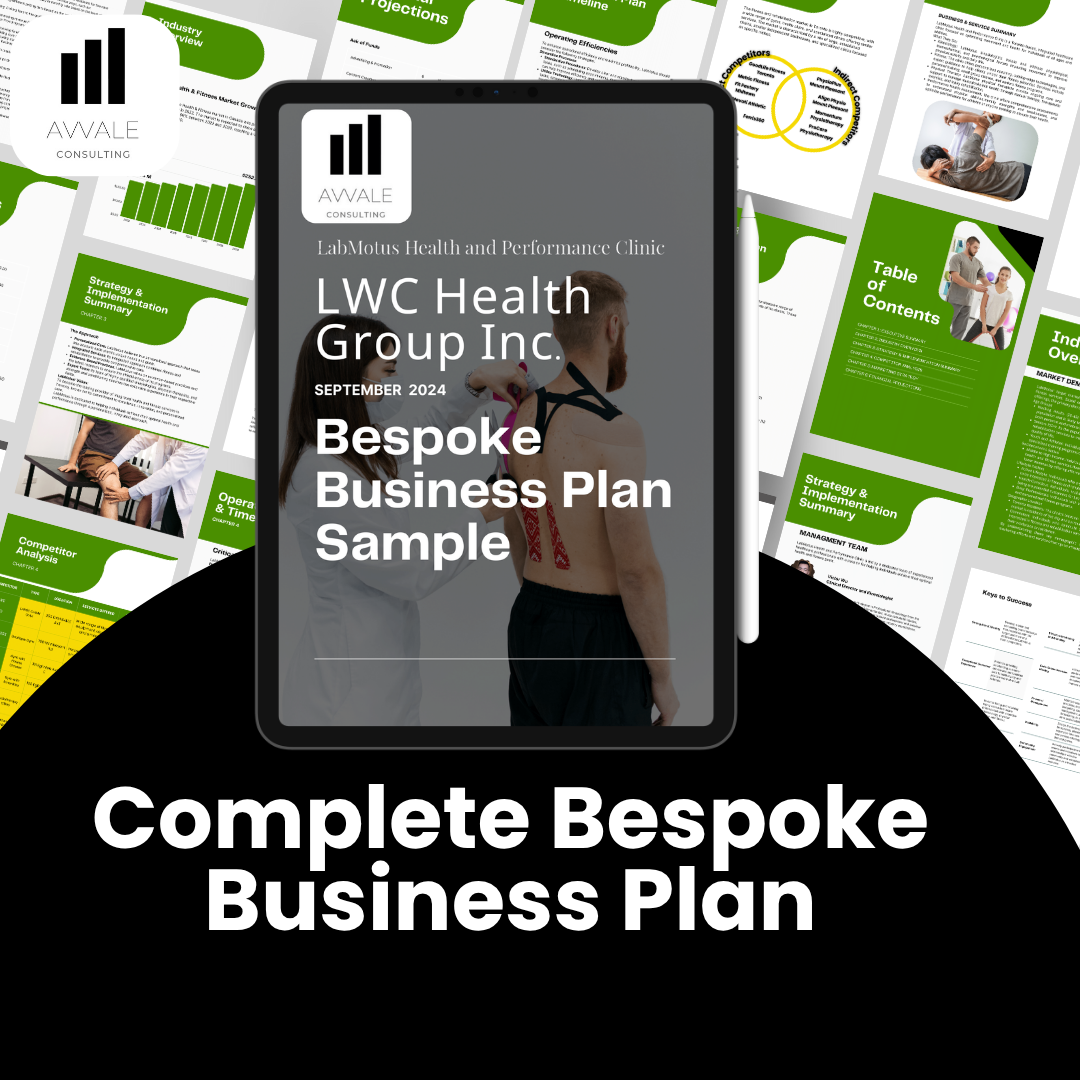
Bespoke Business Plan
Full plan + 5-year forecast. SBA, bank loan & investor ready.