Frozen Bakery Additives Business Plan Template
Frozen Bakery Additives Business Plan Template
Frozen dough is a freeze-damage problem, and additives are how plants solve it. This template and the research behind it are built for founders who want to blend, sell and technically support that solution, and to be funded for it.

Free Frozen Bakery Additives Business Plan Template: Download in 30 Seconds
DIY template with step-by-step instructions. Editable Word doc - yours in 30 seconds.
The Frozen Bakery Additives Market in 2026
Analysts disagree on the exact size of this niche, which is normal for an ingredient category that sits inside larger bakery numbers. The tightest estimate puts the global frozen bakery additives market at roughly $3.2 billion in 2024, heading to about $3.9 billion by 2030 at a 3.5% compound annual growth rate, with the United States alone near $869.6 million and China forecast to grow at 6.3% a year to $773.2 million by 2030 (Global Industry Analysts via Research and Markets, 2025). Other publishers use different definitions and publish different totals, so the number to put in your plan is a range, with the source named next to it.
Where the analysts agree is composition. Emulsifiers held 38.73% of the market in 2025, because they still do the heavy lifting in dough extensibility, crumb softness and fat distribution across long frozen storage. Enzymes are the fastest-growing type, projected at 8.17% a year through 2031 (Mordor Intelligence via Research and Markets, 2026). That gap between today's biggest category and tomorrow's fastest one is the opening for a new entrant: the plants you will sell to are actively reformulating away from synthetic emulsifier labels and want someone to hand them an enzyme system that works.
From frozen dough volume down to your additive line
Why the additive layer grows even when dough volume is flat
Freezing wrecks dough in three ways. Ice crystals puncture the gluten network, yeast cells lose viability during frozen storage, and moisture migrates so the proof is uneven when the plant or in-store bakery finally thaws it. Every one of those problems has a chemical or enzymatic fix, and that is why additive spend per tonne of flour is higher in frozen dough than in fresh bread. As frozen volume grows, additive volume grows faster. The frozen dough segment alone is expected to climb from $27.7 billion in 2025 to $50.9 billion in 2034 (Global Market Insights, 2025), and partially baked products are forecast to roughly double from $13.4 billion to $26.7 billion over the same kind of horizon (Future Market Insights). Par-baked loaves let a supermarket produce a visible fresh-bake moment close to the shopper, and they put the most stress on dough structure, which is where additives earn their price.
The adjacent markets that bracket your forecast
Because the frozen additive total is small and contested, strong plans triangulate with neighbouring categories that have their own published data:
- Dough conditioners: valued at about $4.29 billion in 2025 and projected to reach $6.15 billion by 2030, a 7.4% CAGR (Research and Markets). Frozen formulations are the premium end of this pool.
- Baking enzymes: published estimates range from $575 million to $877 million for 2025 depending on scope, with Fortune Business Insights among the sources. The spread itself is a finding: enzyme revenue is hard to isolate because most suppliers sell blends.
- US bakery emulsifiers: about $638.7 million in 2025, rising to $893.8 million by 2033 at 4.26% a year (Transpire Insight). This is the pool being slowly eroded by clean-label enzyme systems.
Who holds the market today
The top five suppliers, Cargill, Corbion, Kerry Group, ADM and Palsgaard, accounted for roughly 40.7% of the market in 2024 (Global Market Insights). Around them sit Puratos, Lesaffre, Associated British Foods (through AB Mauri), IFF, Novonesis, DSM-Firmenich, Tate & Lyle and Bakels, each with a different strength. Recent launches show where the incumbents are pointing: Puratos introduced a clean-label enzyme-based additive solution for frozen bread and pastry in February 2025, and Corbion launched a natural emulsifier line aimed at frozen buns and rolls in November 2024 (both reported in the Research and Markets market-share analysis).
A multinational cannot economically serve a plant buying two tonnes of improver a year, and it will not rewrite a formulation for a regional pizza-crust maker in a weekend. The 60% of the market outside the top five is where a small blender with a lab, a fast turnaround and a willingness to troubleshoot at the customer's line can win. You will not out-price Cargill on commodity DATEM. You win on application support, minimum order size, and speed.
Regional demand signals worth modelling
Demand follows frozen dough capacity, which follows flour milling and cold-chain logistics. In the US, the practical starting geographies are the Upper Midwest (Minneapolis-St Paul), the Kansas City corridor, the Chicago basin and the Atlanta distribution belt, because each combines mills, bakeries and freight density. In the UK, additive buyers cluster around the large wholesale and in-store bakery supply chains in the East Midlands, Yorkshire and the North West. China is the outlier on growth, at 6.3% a year, but it is an export or licensing play for a start-up, not a launch market.
Your plan should name two or three of these geographies, say why, and attach a customer count to each. A lender reading "Midwest bakeries" learns nothing. A lender reading "41 frozen dough and par-bake plants within a 350-mile truck radius of Minneapolis, 14 of which we have already sampled" learns that you have done the work. The template includes a customer-mapping sheet that forces you to build that list.
Questions Founders Ask Before They Blend a Batch
These are the questions that come up again and again in searches and in client calls. The short answers are here so your plan can address them directly.
What additives are used in frozen bread dough?
Five families do almost all of the work. Emulsifiers such as DATEM, SSL and mono- and diglycerides strengthen the gluten network and soften the crumb. Enzymes, mainly fungal alpha-amylase, xylanase, lipase and glucose oxidase, modify starch, pentosans and lipids in ways that replace or reduce chemical improvers. Oxidants, chiefly ascorbic acid, tighten dough that freezing has relaxed. Hydrocolloids such as guar, xanthan and cellulose derivatives hold water so ice crystals stay small. Freeze-tolerant yeast is selected so the culture survives months at minus 18 degrees Celsius, and it is usually bought from a yeast maker such as Lesaffre or AB Mauri rather than blended in.
Why do frozen doughs need more additives than fresh dough?
Fresh dough goes from mixer to oven in a few hours. Frozen dough waits weeks, passes through freeze-thaw cycles in distribution and sits in a retailer's freezer. Over that time yeast dies, gluten weakens and water redistributes. Every additive in a frozen system is there to protect one of those three things. If your plan cannot say which of the three each product in your range addresses, it will not survive a technical question from a plant manager.
Can enzymes replace emulsifiers in frozen dough?
Partly, and the direction of travel is clear. Enzyme blends combined with lecithin have replaced DATEM (E472e) in wholemeal bread while holding volume and texture, and bakers increasingly ask for preservative-free enzyme systems that let them make clean-label claims (Snack Food & Wholesale Bakery). In frozen dough the replacement is less complete, because ice-crystal damage still needs the structure that emulsifiers provide. The practical approach is a reduced-emulsifier hybrid, which is what many customers will actually buy.
Do I need a food manufacturing licence to blend additives?
In the US there is no single manufacturing licence, but a facility that makes, packs or holds food must register with the FDA and operate under a written food safety plan with preventive controls. In the UK you register the premises with your local authority at least 28 days before trading, and an approval is required only for certain products of animal origin. The detail is in the licensing section below.
What It Costs to Open a Blending Business
The first decision that moves your capital need by a factor of ten is whether you build your own blending room or buy blended product from a contract manufacturer under your own formulations. Both are legitimate. The plan must say which one you are doing and why.
- Lean route (contract blending, own formulations): roughly $70,000 to $175,000 (about £55,000 to £138,000). You pay a toll blender per batch, run application trials in rented lab time, and carry inventory and receivables.
- Own-plant route: roughly $240,000 to $770,000 (about £190,000 to £608,000). You lease a food-grade light-industrial unit, install a blender, scales and packing line, and build a small application lab.
These ranges are Avvale planning estimates assembled from equipment price lists, light-industrial lease rates and the compliance steps below. They are not survey data, and the plan should show you obtained live quotes before the loan committee does.
Own-plant route: where the first $500,000 goes
Equipment checklist with price ranges
A blending room is simple mechanically and unforgiving on hygiene and accuracy. A micro-ingredient such as an enzyme concentrate is dosed in grams per hundred kilograms of carrier, so the weighing system matters more than the mixer. Budget in this order.
| Item | Typical cost (USD) | Why it matters |
|---|---|---|
| Ribbon or paddle blender, 500 to 2,000 lb working capacity | $28,000 to $95,000 | Mixing uniformity at 0.01% to 1% inclusion is the product. Request a coefficient-of-variation test report from the maker. |
| Precision micro-ingredient scales and load cells | $8,000 to $30,000 | Enzyme and oxidant doses are small and expensive. Weighing error is both a quality and a margin leak. |
| Sifter, magnets and inline metal detector | $10,000 to $30,000 | A documented foreign-body control is a retailer and auditor requirement, not a nice-to-have. |
| Bag-filling, sealing and labelling station | $12,000 to $40,000 | Customers want 10 to 25 kg multiwall bags with lot codes that trace to every raw material. |
| Pallet racking and a used forklift | $8,000 to $25,000 | Raw materials arrive on pallets, and enzymes need cool, dry storage. |
| Application lab: spiral mixer, proofer-retarder, blast freezer, deck oven | $30,000 to $85,000 | Without it you cannot prove performance after freezing, which is the only claim customers care about. |
| Texture analyser or farinograph (new or refurbished) | $12,000 to $45,000 | Objective data turns a trial into a quote. |
| Food safety system: HACCP plan, PCQI training, audit fees | $12,000 to $38,000 | Needed for FDA preventive controls and for SQF or BRCGS if you sell to larger plants. |
| Product liability and recall insurance | $6,000 to $20,000 a year | Lenders and customers both ask for the certificate. |
Two software lines belong in the plan. Formulation software such as Genesis R&D by Trustwell tracks ingredient statements, allergens and nutrition per blend, and a batch-traceability tool or ERP ties each lot to supplier certificates. Budget $5,000 to $18,000 for the pair in year one.
The cost most plans miss: application support
A bakery does not buy a bag of additive. It buys a result on its own line, with its own flour, its own freezer curve and its own thaw conditions. Every new customer needs two to five trials before they commit, and each trial costs flour, labour and a technologist's day. Model roughly one technologist-day per $2,000 of first-year contract value and keep the number in the opex line, because lenders who have seen failed ingredient start-ups know that unfunded technical support is how they die.
Who You Buy From, and Who You Compete With
The strangest feature of this industry is that your suppliers are also your largest competitors. The companies that make the raw enzymes and emulsifiers sell finished improver systems to the same plants you want as customers. The plan must show how you work with that rather than pretend it is not happening.
| Company | What they supply | Role for a new entrant |
|---|---|---|
| Kerry Group | Bakery enzymes, emulsifiers, texture improvers, preservation systems for frozen bakery | Raw-material source and the benchmark for application depth |
| Puratos Group | Improvers, enzymes and sourdough systems; clean-label enzyme additive for frozen bread and pastry launched Feb 2025 | Mostly a competitor; sells direct to larger plants |
| Corbion | Emulsifiers, natural shelf-life solutions, clean-label emulsifier line for frozen buns and rolls | Raw-material source for emulsifiers and mould inhibitors |
| Novonesis | Baking enzyme concentrates | Primary enzyme source for blenders who build their own systems |
| IFF | Enzymes and texturants from its Danisco heritage | Enzyme source with technical literature |
| DSM-Firmenich | Enzymes and bakery ingredient systems | Enzyme source; also a systems competitor |
| ADM and Cargill | Lecithin, mono- and diglycerides, emulsifier blends | Bulk emulsifier supply; hard to compete on price |
| Palsgaard | Emulsifiers including palm-free options | Specialist emulsifier source |
| Lesaffre and AB Mauri (ABF) | Yeast, improvers and baking mixes | Customers of yeast, competitors in finished systems |
| Bakels Group | Bakery ingredients and improvers for artisan and industrial bakers | Closest in positioning to a regional blender |
| Tate & Lyle | Starches, fibres and hydrocolloids | Texture and water-binding ingredients |
The pattern in that table is the strategy. You buy enzyme concentrates from Novonesis, IFF or DSM-Firmenich, emulsifiers from Palsgaard, ADM or Cargill, and hydrocolloids from Tate & Lyle or a specialist, and you add value in three places they will not: a formulation tuned to one customer's flour and freezer curve, a minimum order of one pallet instead of one truckload, and a technologist who answers the phone. The plan should name the two or three suppliers you have sourced quotes from, state payment terms (30-day terms are typical for established accounts, with prepayment common for new ones), and describe a second source for every critical raw material.
Competitor analysis your plan should contain
Most competitor sections in business plans for this category list company names and stop. A lender wants to know why a customer would switch. Build a short matrix for each competitor in your target region covering minimum order quantity, lead time on a custom blend, whether they offer on-site trials, and whether their frozen-dough range carries a clean-label claim. Gaps in that matrix, for example "nobody within 400 miles will run a trial on your line inside a week", are the sentences that carry a plan.
Pricing, Margins and Unit Economics
Additive blends are priced on performance per tonne of flour, not on raw material cost. Improver systems are dosed at a low percentage of flour weight, often somewhere between 0.5% and 2% depending on the system, so a plant buying a few tonnes a year is spending a small fraction of its ingredient bill on additives and is much more sensitive to a failed batch of dough than to a 10% price difference. That is why the sales pitch is risk reduction, and why gross margins for a competent blender sit well above those of a flour miller.
Three business models compared
| Model | How you earn | Typical gross margin | Capital need | Main risk |
|---|---|---|---|---|
| Blend-and-repack distributor | Buy standard improver systems from majors, repack and resell with service | 20% to 28% | Low ($70K-$175K) | Easily undercut; customers can buy direct |
| Custom blender | Formulate and blend customer-specific systems for frozen dough, par-bake or pizza crust | 32% to 44% | Medium ($240K-$500K) | Technical support cost; customer concentration |
| Formulator with proprietary system | Own enzyme combinations, patent or trade-secret protected, sold at premium or licensed | 45% to 60% | High; needs R&D and regulatory work | Long sales cycle; incumbents copy quickly |
The gross-margin bands are Avvale planning ranges built from conversations with ingredient blenders and from the cost structure below, not published benchmarks. State that in your plan and show the arithmetic.
Worked example: a Midwest custom blender
Take a blender selling 180 tonnes a year of frozen-dough improver systems to nine regional accounts averaging 20 tonnes each. At an average price of $5.40 per kilogram that is $972,000 of revenue. At a typical 1% dose, 180 tonnes of improver supports about 18,000 tonnes of flour, which is roughly 2.4 mid-sized dough plants' worth of output, so the customer list needs to be broad rather than deep.
| Line | Per kg | Annual (180 t) | Share of revenue |
|---|---|---|---|
| Revenue | $5.40 | $972,000 | 100% |
| Ingredients and packaging | $2.65 | $477,000 | 49% |
| Direct labour (three production staff) | $0.75 | $135,000 | 14% |
| Freight out, QA, consumables | $0.17 | $30,000 | 3% |
| Gross profit | $1.83 | $330,000 | 34% |
| Rent and utilities | $70,000 | 7% | |
| Technologist, lab and sales | $100,000 | 10% | |
| Insurance, audit, software | $38,000 | 4% | |
| Marketing and trade shows | $20,000 | 2% | |
| Operating profit | $102,000 | 10.5% |
Break-even is where the plan gets tight. Treat labour and overheads as fixed, at $363,000 a year. Variable cost per kilogram is $2.82 (ingredients plus freight and QA), so each kilogram contributes $2.58, or 47.8% of the price. Break-even revenue is $759,000, which is about 141 tonnes, or 78% of the modelled capacity. A blender running at 70% of plan is losing money. This is why customer concentration and the trial-to-order conversion rate are the two numbers lenders probe hardest.
What pushes margin up or down
- Enzyme concentration price: enzymes are the costliest raw material per gram. A 10% swing in enzyme cost moves gross margin by about one point on a system where enzyme is 18% of ingredient cost.
- Batch size: small batches waste time at the blender. Minimum batch sizes of 500 to 1,000 lb protect margin without forcing small customers away.
- Technical service bundling: charging nothing for trials is normal, but charging a trial fee that is credited against the first order filters out curious customers who never buy.
- Specification premium: clean-label and allergen-controlled systems command a premium of 8% to 15% over standard improvers in the planning model, because customers cannot easily source them elsewhere.
The Avvale $5 template includes an editable version of the model above, with price, dose rate, capacity and cost lines you can change. The $300 and $1,000 packages replace the planning ranges with figures built from your suppliers' quotes.
Funding Routes: SBA, Start Up Loans and Beyond
A food-ingredient blender is a manufacturer in lending terms, and that matters. Lenders classify the business under a manufacturing code, usually NAICS 311999, All Other Miscellaneous Food Manufacturing, though some lenders prefer 325998 for chemical-style blending. Confirm the code with your lender up front, because it determines the benchmark ratios they compare you against.
US routes
- SBA 7(a): the workhorse. Loans go up to $5 million, with the SBA Express variant available up to $500,000. For a lean-route start-up asking $100,000 to $175,000, this is the standard route. Lenders will want a business plan with three years of projections, owner equity (commonly 10% to 20% of project cost), and personal guarantees from owners with 20% or more.
- SBA 504: fixed-asset financing for owned real estate and heavy equipment, structured with a bank first lien, a community development company second lien and a borrower contribution. It suits an own-plant build where the blender, racking and lab equipment are the main cost.
- Equipment finance: blenders, scales and the lab are all financeable against the asset itself, which can keep the SBA loan for working capital.
- State and USDA programmes: several states run food-manufacturing grants and low-interest funds. Check the economic development agency in your target state before signing a lease.
Do not quote an approval rate in your plan unless you have the source. The SBA publishes lender and loan-size data by NAICS code, and the template's funding sheet shows you where to look it up for your own code, which is more credible than an unattributed percentage.
UK routes
- Start Up Loans: up to £25,000 per founder at a 6% fixed rate, with mentoring, suited to the lean contract-blending route.
- Commercial bank and asset finance: for the blender and lab, with the British Business Bank's Growth Guarantee Scheme available through participating lenders while it runs.
- SEIS and EIS: if you are building a proprietary enzyme system that qualifies as innovative, the Seed Enterprise Investment Scheme allows up to £250,000 of investor funding with tax relief for investors, and EIS applies at later stages.
What a lender checks in this specific business
Lenders new to ingredients ask the same four questions. First, who are your first five customers, and have they signed letters of intent or run trials? Second, where does your technical expertise come from, and can the business survive without you? Third, what is the shelf life of your finished blends, and how do you manage enzyme activity loss in storage? Fourth, what is your recall plan? Answering these in the plan, with named people and documented procedures, moves a file from the maybe pile to the yes pile.
Regulation: FDA, FSA and the EU Union Lists
Additive blending sits where two regulatory systems meet. The ingredients you buy are regulated as food additives, enzymes or GRAS substances, and the facility you operate is regulated as a food manufacturer. A plan that covers only one of the two reads as incomplete.
United States
| Requirement | Authority | What it means for you | Cost and timing |
|---|---|---|---|
| Food facility registration | FDA | Any facility that manufactures, processes, packs or holds food for US consumption registers with the FDA and renews every even-numbered year between October and December. | Free; completed online in a day |
| Preventive controls for human food (21 CFR Part 117) | FDA, under FSMA | A written food safety plan, hazard analysis, allergen controls, supplier verification and recall plan, overseen by a Preventive Controls Qualified Individual. | PCQI course typically $600 to $1,000 per person; plan writing 2 to 6 weeks |
| Enzyme preparations: GRAS notice or food additive petition | FDA | If you formulate with a new enzyme or a new use, the FDA enzyme guidance sets the chemical and technological data to submit. Using already-notified enzymes from established makers avoids this. | GRAS notices run many months; most blenders buy notified enzymes instead |
| Standards of identity for bakery products (21 CFR Part 136) | FDA | Defines which dough conditioners can appear in standardised breads and rolls, which constrains what your customers may ask you to put in the blend. | Desk research, no fee |
| Azodicarbonamide limit | FDA | Permitted as a flour aging and dough conditioning agent up to 45 parts per million of flour. The FDA issued a request for information on ADA in May 2026, so the status is under review. | Plan to formulate without it |
| State rules | States | California bars potassium bromate and several other additives in food sold there from 2027 under its Food Safety Act. Check each target state. | Reformulation cost if you ever stocked bromate |
| Allergen labelling | FDA | Nine major allergens including sesame (added in January 2023). Enzyme carriers and lecithin are common allergen sources. | Built into the food safety plan |
Read the sources before you copy them. The Federal Register request for information on azodicarbonamide describes the 45 ppm limit and the current review. The FDA guidance on enzyme preparations lays out the data package for enzyme notices. The eCFR text of 21 CFR Part 136 lists permitted ingredients in standardised bakery products.
One commercial point follows from the regulation. Potassium bromate is not on the federal prohibited list, but it was effectively abandoned by US bakers after the FDA asked industry to stop using it, and several states are now legislating. Azodicarbonamide is under review. Customers who have been burned by reformulation want a supplier whose standard range is already free of both. That is a sales line as well as a compliance one.
United Kingdom
- Food business registration: register the premises with your local authority at least 28 days before you start trading. This is free, and an approval (a stricter step) is needed only for products of animal origin, which most additive blends are not.
- Additives and enzymes law: Great Britain retains EU Regulation (EC) 1333/2008 as assimilated law, alongside The Food Additives, Flavourings, Enzymes and Extraction Solvents (England) Regulations 2013. Permitted additives and conditions of use are published in the FSA's registers.
- New authorisations: from 1 April 2025, authorisations take effect after a ministerial decision and appear in the register rather than being made by statutory instrument. The FSA's food additives authorisation guidance and the food enzymes authorisation guidance explain the application route.
- Hygiene and HACCP: a documented HACCP-based system under assimilated Regulation (EC) 852/2004. Retailer-supplying customers will expect BRCGS certification.
- Allergens: the 14 major allergens must be declared and managed. Gluten-containing carriers and soya lecithin are the usual issues in bakery blends.
European Union and export markets
If you intend to export to EU member states, the relevant framework is Regulation (EC) 1333/2008 on food additives and Regulation (EC) 1332/2008 on food enzymes, plus the Union lists of permitted substances. Product placed on the EU market must comply with the EU lists, and Great Britain's registers can diverge from them over time, so check both before shipping. Enzymes used as processing aids with no technical effect in the finished food are generally not declared on the label in either the EU or the US, which is the commercial reason clean-label enzyme systems are replacing emulsifiers that must be named in the ingredient list. Always confirm the current status of the Union list for enzymes before you commit to an EU launch, because that list has been developed in stages after safety evaluations by the European Food Safety Authority.
Need more than a template? We'll do the work for you.
Industry-specific structure. Write it yourself with expert guidance.
Download TemplateWe handle the research & narrative - investor-ready copy in 3–4 days
Get StartedFull plan + 5-year forecast, written by our team in 10–14 days
Book a CallSix Mistakes That Sink Additive Start-Ups
- Selling a product instead of a result. A bakery cares whether the frozen roll proofs evenly after 12 weeks at minus 18 degrees Celsius, not how many ingredients are in your improver. Plans that describe blends without describing trial protocols get nowhere with technical buyers.
- Underfunding trials. Each new account takes two to five bench or line trials. At a technologist's day-rate plus flour, that is a real cost line. Founders who treat trials as free marketing run out of cash while the pipeline looks healthy.
- One-customer dependency. The worked example above needs nine accounts. Losing one 20-tonne customer drops the business below break-even. Plan a ceiling of 25% of revenue from any single account.
- Ignoring enzyme activity loss. Enzymes lose activity with heat and moisture. A blend that tested well on the day it was made can underperform at month six. Document shelf life, storage conditions and re-test intervals.
- Reformulating late for allergens and labelling. Soya lecithin or a wheat carrier discovered after a customer's label has been printed is an expensive conversation. Declare every carrier and its source up front.
- Competing on commodity emulsifier price. ADM, Cargill and Palsgaard will always sell DATEM cheaper than you can. Your plan should position emulsifier as the platform on which your enzyme and hydrocolloid know-how rides, not the thing you sell.
Frozen Dough Glossary
Lenders from outside the baking trade will not know these terms. A short glossary in your plan, or at least precise use of the words, signals credibility.
- DATEM (E472e): diacetyl tartaric acid esters of mono- and diglycerides, a dough strengthener that improves volume and crumb.
- SSL (E481): sodium stearoyl lactylate, a crumb softener and dough conditioner that is common in frozen systems.
- Ascorbic acid (vitamin C): an oxidant that tightens gluten, widely used to offset the weakening that freezing causes.
- Alpha-amylase: an enzyme that breaks down damaged starch, feeding yeast and softening crumb.
- Xylanase: an enzyme acting on pentosans in flour, improving dough handling and volume.
- Glucose oxidase: an enzyme that strengthens gluten indirectly, often used to replace chemical oxidants.
- Par-baked: partially baked and then frozen, finished in the retailer's oven.
- Ice recrystallisation: growth of ice crystals during frozen storage, the main physical cause of freeze damage.
- PCQI: Preventive Controls Qualified Individual, the person the FDA expects to oversee your food safety plan.
- Carrier: the bulk powder, often flour or dextrose, that dilutes micro-ingredients so they can be dosed accurately.
Sample Business Plan Preview
Northgate Dough Systems LLC: custom frozen-dough improver blending, Minneapolis-St Paul
Northgate Dough Systems will formulate, blend and technically support enzyme-based improver systems for frozen dough and par-bake plants within a 350-mile radius of Minneapolis. The business exists because regional plants cannot get small-batch, line-tested, clean-label systems from the multinationals that dominate the sector, where the top five suppliers hold roughly 40.7% of the market and minimum orders are set for truckloads.
At capacity the plant produces 180 tonnes a year across nine accounts, generating about $972,000 of revenue, a 34% gross margin and a 10.5% operating margin. Break-even is reached at 141 tonnes. The founder's twelve years as a mill technologist and signed trial agreements with four plants underpin the first-year volume. The company seeks $265,000 through an SBA 7(a) loan alongside $60,000 of owner equity to fund the unit fit-out, a 1,000-lb ribbon blender, an application lab and six months of working capital.
The full template expands this into a lender-ready document with the model attached. Names and figures in the sample are illustrative and are built from the cited data used on this page.
What's in the Template
The frozen bakery additives business plan template gives you an editable structure written for ingredient manufacturers and the lenders who assess them.
- Executive Summary: the venture framed around the problem it solves, freeze damage in dough, and the first named customers
- Company Overview: structure, ownership, premises and the formulation expertise behind the business
- Industry Analysis: additive market size by type, with the emulsifier-to-enzyme shift and the top-five concentration data
- Customer Analysis: mapping of dough plants, par-bake lines, in-store bakery suppliers and co-packers in your region
- Product and Formulation Plan: system families, dosing, shelf life, trial protocol and allergen matrix
- Operations Plan: blending flow, lot traceability, quality checks and supplier qualification
- Regulatory Plan: FDA registration, preventive controls, FSA registration and EU export checks
- Marketing and Sales Plan: trial-to-order funnel, trade shows and technical selling
- Management Team: technologist, sales lead and quality manager roles
- Financial Plan: a five-year model with the break-even, capacity and customer-concentration analysis shown above
The financial forecast add-on, included in the $300 / £250 and $1,000 / £800 packages, provides the income statement, cash flow, balance sheet, break-even analysis and capital requirement, built from your quotes rather than planning ranges. For related ingredient niches, see our bakery premixes and baking enzymes templates, and our broader free business plan template hub.
How a Minneapolis Technologist Funded a Dough-Improver Blending Business
Priya Raman spent twelve years as a technologist at a regional flour mill and saw the same problem every month: small frozen-dough plants wanted clean-label improver systems but could not meet the minimum orders of the large suppliers. She approached Avvale with a trial agreement from four plants and no financial model. Our team built the customer map, the break-even analysis that showed the business needs 78% of capacity to cover fixed cost, a trial-cost budget, and a regulatory plan covering FDA registration, preventive controls and allergen management. The lender had approved neither a food-ingredient blender nor a start-up before, and the capacity and concentration analysis gave the credit officer a way to underwrite it.
Composite based on real Avvale client outcomes. Name and identifying details changed for confidentiality.
Read the full food and beverage case study →
Frequently Asked Questions
What additives are used in frozen bread dough?
Can enzymes replace emulsifiers in frozen dough?
How much does it cost to start a frozen bakery additives business?
Do I need a licence to blend bakery additives in the US or UK?
Is azodicarbonamide still allowed in bread dough?
How profitable is a frozen bakery additives blender?
What do lenders look for in a frozen bakery additives business plan?
Get Your Frozen Bakery Additives Business Plan
Choose the level of support that fits your stage and budget.

Frozen Bakery Additives Business Plan Template
Plug-and-play structure. Ideal if you want to write it yourself.

Market Research & Content
We handle research & narrative. You get investor-ready copy.
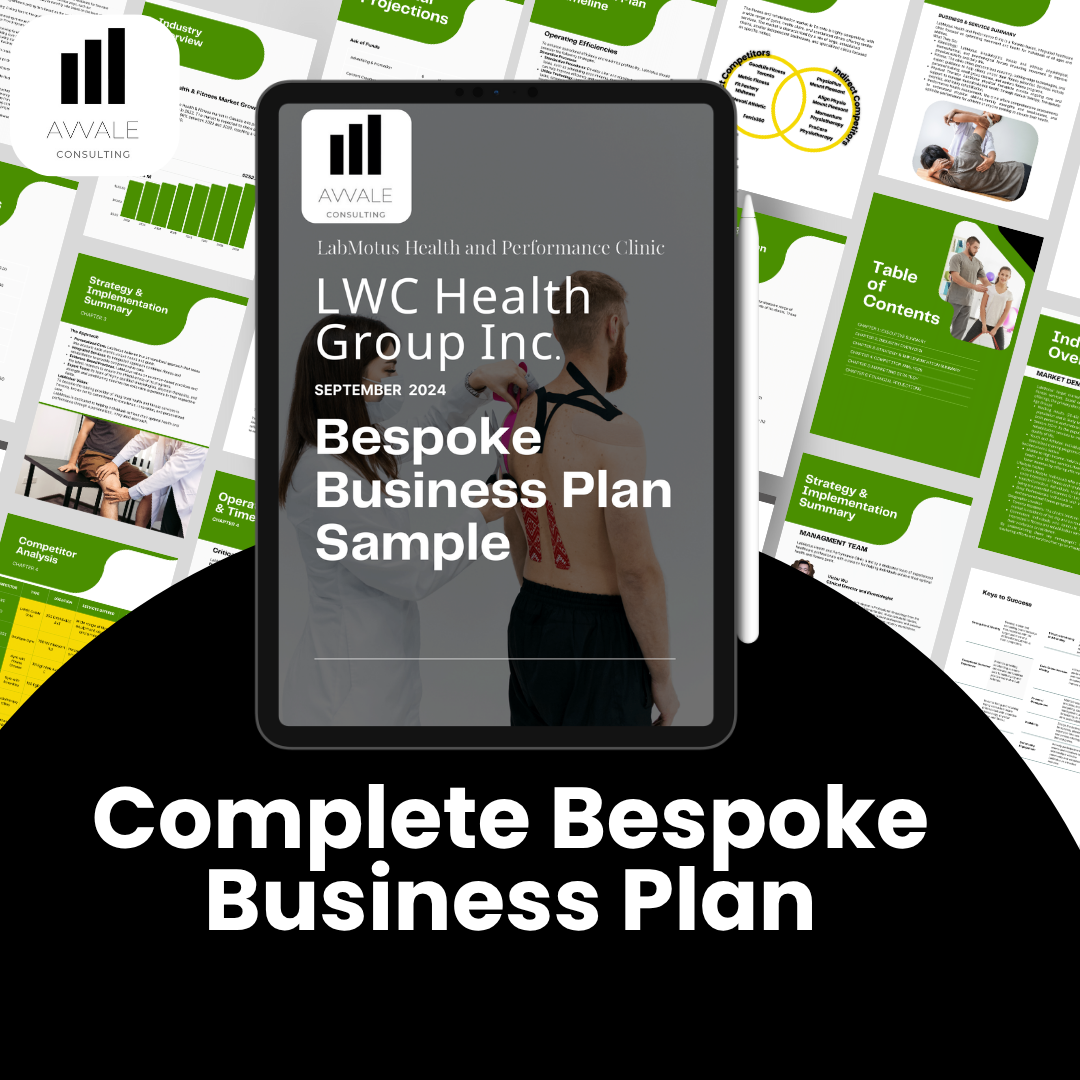
Bespoke Business Plan
Full plan + 5-year forecast. SBA, bank loan & investor ready.