Holographic Business Plan Template
Holographic Business Plan Template
A working plan for a holographic display or hologram advertising business — the equipment, the suppliers, the compliance paperwork, and the unit economics, not a generic slideshow guide.

Download Your Free Holographic Business Plan Template
DIY template with step-by-step instructions. Editable Word doc — yours in 30 seconds.
Equipment & Display Technology You'll Actually Buy
Before writing a single financial projection, decide which hologram business you are building, because the equipment list is completely different depending on the answer. There are two dominant models in this niche: a rental and activation operator who owns a fleet of portable displays and travels to client events, and a hardware reseller/integrator who sells or installs permanent systems into retail stores, showrooms, and corporate lobbies. Most first-time operators start as a rental business and add integration work once they have a client base and a track record.
The technology itself also splits into three tiers that your equipment budget needs to reflect honestly. LED "hologram fan" displays are the entry point — genuinely an optical illusion produced by spinning LEDs, cheap to buy, and the fastest way to get a demo in front of a client. Transparent-LCD units like the Holobox sit in the middle tier — a real screen behind glass rather than a spinning illusion, better suited to permanent retail or hospitality deployments where daylight visibility matters. True volumetric or Pepper's-ghost-class systems sit at the top, delivering the most convincing "floating image" effect but requiring controlled lighting, a fixed installation, and a budget most first-time operators can't justify until they have a portfolio of paying clients.
Core equipment checklist
- LED hologram fan units (39"–60" diameter): $750–$3,500 per unit; the workhorse of the rental fleet, portable and fast to set up
- Transparent-LCD or "Holobox"-class display: $15,000–$80,000; used for life-size retail, telehealth, or hospitality installations rather than trade-show pop-ups
- Content creation workstation and software licences: $3,000–$8,000 hardware plus ongoing Blender/Cinema 4D/After Effects and TouchDesigner licences
- Rigging, mounting brackets & safety enclosures: $1,500–$6,000 per unit, mandatory for public installations
- Transit cases, van or trailer for touring installs: $8,000–$25,000
- Backup power & on-site technical kit (spare LEDs, cabling, laptops): $2,000–$6,000
A realistic starter fleet for a rental operator is three to five fan-class units plus one flagship transparent-LCD unit for premium bookings — roughly $65,000–$140,000 of hardware before any content, insurance, or vehicle costs are added. Skipping the flagship unit and running fan-class equipment only is the fastest way to get to a first paying client, but it caps the average booking value you can quote.
Choosing Your Business Model
Every credible business plan in this niche needs to commit to a primary model rather than trying to be a hardware manufacturer, a rental company, and a systems integrator all at once in year one. The table below is the comparison we build into every bespoke plan we write for this sector, because lenders and investors will ask the same question in different words: "how do you actually make money on this?"
| Model | Capital Needed | Typical Margin | Best For |
|---|---|---|---|
| Rental & activation | $75,000–$150,000 | 15–30% net | Events, trade shows, seasonal retail campaigns |
| Hardware resale & integration | $50,000–$120,000 | 10–20% gross on units | Retail chains, hospitality, healthcare installations |
| Hybrid (both, staged) | $150,000–$300,000 | Blended 18–26% | Founders with prior AV, events, or systems-integration experience |
The hybrid model is where most operators end up by year three, but starting there on day one spreads thin capital across two different sales motions and two different operational skill sets before either one is proven. Your business plan's use-of-funds section should show which model you're funding first and what specific revenue milestone triggers expansion into the second.
Startup Costs & Funding Options
Starting a holographic display business typically requires $75,000 to $300,000 in the US, or £60,000 to £240,000 in the UK. The spread is wide because the low end describes a solo operator running fan-class rentals out of a van, and the high end describes an operator who has also built a client-facing demo showroom — a near-universal requirement for landing corporate and retail clients who want to see the technology working before they commit to a six-figure campaign.
Cost Breakdown
- Holographic display hardware: $15,000–$80,000 (£12,000–£65,000)
- 3D content creation & motion design (initial library): $5,000–$25,000 (£4,000–£20,000)
- Installation, mounting & technician integration: $10,000–$50,000 (£8,000–£40,000)
- Demo showroom / client-facing space fit-out: $20,000–$80,000 (£16,000–£65,000)
- FCC/CE/UKCA compliance testing & certification: $2,000–$8,000 (£1,500–£6,000)
- Product liability & equipment insurance (annual): $3,000–$10,000 (£2,500–£8,000)
- Sales collateral, demo reel & trade show presence: $5,000–$20,000 (£4,000–£16,000)
- Working capital (3–6 months): $15,000–$50,000 (£12,000–£40,000)
Funding Routes
In the US, SBA 7(a) loans are the standard route for equipment-heavy small businesses — terms run up to 10 years for equipment and working capital, up to $5M in total loan size, and the average 7(a) loan size in FY2025 was $477,571, comfortably covering a mid-sized fleet-plus-showroom build. Our bespoke business plan service formats projections to SBA lender expectations. In the UK, the Start Up Loans scheme offers up to £25,000 per founder (up to £100,000 for a founding team) at 6% fixed interest with free mentoring — usually paired with a private angel investment for the equipment-heavy part of the build, since £25,000 alone rarely covers a full fleet and showroom.
Equipment finance and leasing is worth evaluating alongside a term loan, particularly for the transparent-LCD or flagship unit, since specialist AV and technology equipment lenders will often finance 70–90% of the hardware cost against the equipment itself as collateral, preserving working capital for content production and the first few months of marketing spend. This matters more in this niche than in most service businesses, because the display hardware itself is a genuinely bankable asset in a way that, say, a marketing consultancy's laptops are not.
Suppliers & Manufacturers Worth Researching
Your business plan's competitor and supplier analysis should distinguish between companies you might buy hardware from and companies you'll be pitching against for the same client budget — in this niche, they're often the same names.
- Kino-mo (Hypervsn): London-based manufacturer of LED "hologram fan" displays, widely used for retail and trade-show activations; also sells directly to end clients, making it both a hardware source and a competitor
- ARHT Media: Toronto-listed company specialising in life-size volumetric hologram broadcasting for corporate events and telepresence
- Holoconnects: Manufacturer of the "Holobox" — an 86" transparent-LCD unit built for hospitality, telehealth, retail, and education deployments
- Holofex: Hologram fan and display retailer serving the events and retail activation market
- Lumina Fans: LED hologram fan manufacturer and content-pairing resource, popular with smaller activation studios
- 3D Hologram Rentals: US-based rental specialist for trade shows and special events, a useful benchmark for rental-model pricing
If you're building a hardware-adjacent business rather than pure holography, our LED screen advertising business plan template covers the closely related digital-signage supplier landscape, which is worth reading if you plan to bundle hologram displays with conventional LED advertising screens.
Sourcing decisions in this niche come down to a trade-off between buying direct from a manufacturer like Kino-mo or Holoconnects — better unit pricing and manufacturer support, but longer lead times and minimum order quantities that don't suit a solo operator — versus buying through a retailer like Holofex or Lumina Fans, which carries a price premium but lets you start with a single unit and scale order volume once demand is proven. Most first-time operators buy their first one or two units through a retailer to validate demand, then negotiate direct manufacturer pricing once they're ready to commit to a five-plus unit fleet order. Building this two-stage sourcing plan into your business plan's operations section signals to lenders that you've thought through supply chain risk rather than assuming a single supplier relationship will hold for the life of the business.
Licensing & Compliance
There is no dedicated "hologram operator" licence in any major market, but the hardware itself sits under electrical, radio, and — in some cases — laser safety regulation, and getting this wrong before a venue deployment is the single most common reason first-time operators get pulled from a booking.
United States
- FCC equipment certification for EMI/RF compliance on LED and radio-enabled display units
- FDA CDRH laser product compliance — only applies if you're running true laser-projection systems rather than LED fan displays, but the labelling and class requirements are strict where it does apply
- State business registration and a sales tax permit if you resell hardware
- Standard commercial general liability policy, typically required by venues before load-in
United Kingdom
- UKCA/CE marking on every electrical display product line, administered under Office for Product Safety and Standards guidance
- PAT testing before every event deployment — a portable-equipment requirement most first-time operators underestimate the frequency of
- WEEE registration if you import hologram hardware into the UK, since the units count as electronic waste at end-of-life
- ASA/CAP Code compliance for any advertising content displayed on the hologram itself, since it's treated as an advertising medium, not just hardware
- Public liability insurance, typically £5M minimum cover for venue and event work
Other Jurisdictions
Across the wider European Union, CE marking plus WEEE and RoHS compliance applies to any hologram hardware you manufacture, import, or resell into EU member states. If your displays are interactive — face-tracking kiosks or AI-driven hologram assistants, for example — GDPR obligations kick in the moment the system captures visitor data, even briefly for gesture recognition.
Insurance & risk allocation
Venue contracts for events and retail activations almost universally require proof of commercial general liability insurance before load-in, typically £5M/$2M minimum cover, and many corporate venues additionally require equipment-in-transit cover given the value of a touring fleet. Because the hardware itself carries genuine electrical and structural risk — rigging a display above head height in a crowded retail environment is not a trivial installation — your business plan's risk section should show a named insurance provider and policy type rather than a generic "we will get insurance" line, since lenders reviewing equipment-heavy plans specifically look for this level of detail.
Revenue Model & Pricing
Pricing in this niche splits cleanly along the same line as the equipment decision. Hourly event activations for a fan-class display run $220–$275 per hour in the US; UK operators typically quote per-installation rather than hourly, with short-term event pricing landing at £3,000–£15,000+ depending on display size, content complexity, and venue logistics. Outright unit sales for fan-class hardware run $750–$3,500 per display, while a custom transparent-LCD or volumetric installation can run $50,000–$200,000+ for a permanent retail or corporate lobby deployment.
A worked example makes the unit economics concrete: a UK-based holographic activation operator running eight event installations a month at an average £6,000 per installation generates £576,000 in annual revenue. After equipment amortisation, technician day-rates, content updates, and travel — which together run roughly 70–78% of revenue in year one — net margin lands around 22–25%, or approximately £127,000–£144,000 a year once past the first 12 months of client acquisition. Margins compress in year one because content production for new clients is disproportionately expensive relative to the reusable content library you build up by year two.
Hardware resale and integration work carries thinner margins, typically 10–20% on the display units themselves, but it produces more predictable, front-loaded cash flow than the rental model, which is why most operators run both revenue streams side by side rather than picking one.
A US-based comparison is worth including alongside the UK worked example above, since lenders on either side of the Atlantic will want to see the model stress-tested against their own market. A US operator running twelve activations a month at an average $6,500 per booking generates $936,000 in annual revenue. Applying the same 70–78% cost ratio in year one, and tightening to roughly 68% by year two as the content library matures, produces a net margin in the 22–28% range — broadly consistent with the UK figures once currency and market size differences are accounted for. Lenders reading a plan with two independently-modelled markets that converge on a similar margin range tend to treat the numbers as more credible than a single best-case scenario.
Operations & Content Pipeline
The operational bottleneck in this business is almost never the hardware — it's content. A fan display or transparent-LCD unit can sit idle in a van for weeks without degrading, but every new client conversation starts with "can you make it look like our brand," and that question determines whether a booking closes in one call or drags across three weeks of revisions.
Building the content pipeline
- Reusable base library: 15–25 generic animations (product reveal, logo spin, countdown, seasonal themes) built once and re-skinned per client, cutting turnaround from weeks to days
- Bespoke client work: priced separately from the rental or hardware fee, typically $500–$2,500 per custom animation depending on complexity
- Software stack: Blender or Cinema 4D for 3D modelling, Adobe After Effects for compositing, and TouchDesigner where the installation needs to respond to motion, touch, or camera input in real time
- Turnaround SLA: most clients expect a 5–10 business day turnaround for a first bespoke animation and 48–72 hours for revisions to an existing template
Fleet logistics are the second operational pillar. A three-to-five-unit fleet needs a maintenance and calibration schedule, spare-parts inventory (LED strips fail predictably after heavy touring use), and a booking calendar that accounts for transit time between venues, not just the event dates themselves. Operators who under-price transit time between back-to-back bookings routinely find their technician day-rate consumes more of the margin than the plan assumed.
Staffing follows a predictable pattern as the business grows. Most founders run the first six to twelve months personally handling sales, on-site installation, and content coordination, bringing in freelance motion designers for overflow content work rather than a full-time hire. The first permanent hire is typically a technician-installer once booking volume exceeds what one person can physically attend, followed by a dedicated content producer once the client base is large enough to need continuous seasonal refreshes rather than one-off project work. Your operations plan should map each hire against a specific booking-volume trigger rather than a calendar date, since revenue growth in this business is lumpy around peak season rather than smooth month-to-month.
Sales & Client Acquisition
This is a demo-led sale, not a cold-outreach sale. Buyers in retail marketing, event production, and hospitality procurement need to see the illusion working in person or on video before they'll commit budget, which changes the entire marketing plan compared to a typical service business.
- Demo reel first: a 60–90 second video showing the display in a real venue, filmed on a phone if necessary, converts better than a polished pitch deck for this category
- Trade show presence: exhibiting your own display at a regional trade show or retail industry event is simultaneously a lead-generation channel and a live product demo
- Direct outreach to event production agencies: agencies that don't own hologram hardware will subcontract activations to you and mark up the fee to their client, becoming a repeatable referral channel
- Retail chain pilots: offering one location a discounted pilot installation in exchange for a case study and a multi-location rollout conversation is the fastest route from a single sale to a recurring contract
- Local press and novelty coverage: hologram installations still generate local news and social coverage in most markets outside major metro areas, which is free client-facing marketing for both you and the venue
Client acquisition cost in this niche is unusually front-loaded: the first three to five clients cost disproportionately more in demo time and free or discounted pilot work than every client after them, because word-of-mouth and repeat bookings from satisfied venues take over once the portfolio exists. Your marketing budget line should reflect a heavier spend in months one through six and a lighter, referral-driven spend from month seven onward.
Industry Snapshot & Market Size
The global digital holography market was valued at $4.22 billion in 2024 and is projected to reach $12.3 billion by 2030, a 20.3% CAGR, according to Grand View Research. Hardware led the market with a 60.53% revenue share in 2024, and North America held the largest regional share at 33.5%, while Asia Pacific is forecast to grow fastest through 2030.
Within Europe specifically, the holographic display market was valued at roughly $800 million in 2024, and the UK segment is forecast to grow at a 26.3% CAGR — faster than the global average, largely driven by retail activation spend and growing adoption in university research and medical simulation settings.
The demand driver most business plans miss is that growth is coming from adjacent industries adopting holographic display as a feature, not from a standalone "hologram industry" buying category. Retail chains buy it for window displays, hospitals buy transparent-LCD units for telehealth consultations, and events companies buy it as one more line item in an experiential marketing budget. Your competitive analysis needs to identify which of those buyer categories you are actually selling into, because the sales cycle, budget size, and decision-maker differ sharply between a retail marketing manager and a hospital procurement officer.
Holographic microscopy and medical imaging currently make up the largest single application segment of the wider digital holography market, which is a useful data point for positioning but not necessarily a market you'll be competing in directly as a display-and-advertising operator — that segment is dominated by specialist medical device manufacturers, not events or retail activation companies. The segment more relevant to a first-time founder's business plan is consumer electronics and advertising, a smaller but faster-growing slice of the same market, where barriers to entry are lower and the sales cycle is measured in weeks rather than the multi-year procurement cycles typical of medical device adoption.
Cyclicality is worth modelling honestly in your financial projections. Event and retail activation demand is seasonal — spiking around major retail calendar moments (holiday season, back-to-school, product launch windows) and trade show calendars in your region. A rental-model operator should expect 30–40% of annual revenue to land in a two-to-three month peak window, which has direct implications for cash flow planning and staffing decisions around temporary technician support during peak season.
Location Strategy for a Demo Showroom
Because this is a demo-led sale, where you put your showroom matters more than it would for most service businesses. The showroom exists to close deals, not to attract passing footfall, so proximity to your actual buyer categories outweighs high-street visibility.
- Proximity to event and marketing agencies: a showroom within a short drive of an agency cluster makes it easy to book a 30-minute client walkthrough on short notice, which shortens the sales cycle materially
- Light industrial or flexible commercial space over retail high street: you need controllable lighting and ceiling height for larger units, which a converted warehouse or studio unit delivers far more cheaply than a retail lease
- Transport links for touring equipment: proximity to major road routes or a van-friendly loading area saves meaningful time and fuel cost across a full touring season
- Co-location with a partner AV or events company: several successful operators sublet space from an existing events production company, sharing overhead while building a referral relationship from day one
A number of first-time operators skip the dedicated showroom entirely in year one and instead run client demos on-site at the client's own venue, using the reduced-fleet fan units for portability. This keeps the startup cost nearer the $75,000 floor rather than the $300,000 ceiling, at the cost of a slightly longer average sales cycle since every demo requires a scheduled site visit rather than an instant walk-in showroom visit.
Need more than a template? We'll do the work for you.
Industry-specific structure. Write it yourself with expert guidance.
Download TemplateWe handle the research & narrative — investor-ready copy in 3–4 days
Get StartedFull plan + 5-year forecast, written by our team in 10–14 days
Book a CallQuestions First-Time Buyers Ask
How much does a holographic display cost?
Entry-level LED fan units run $750–$3,500 per display. Transparent-LCD "Holobox"-class systems used for permanent retail or telehealth installations run $15,000–$80,000. True volumetric or laser-based systems for corporate broadcasting sit at the top end, often $50,000–$200,000+ for a custom install.
Is holographic advertising regulated?
The advertising content is regulated the same way any other digital signage content is — ASA/CAP Code in the UK, FTC advertising rules in the US. The hardware itself needs FCC certification in the US or UKCA/CE marking in the UK before it can legally be deployed in a commercial or public venue.
How do hologram fan displays actually work?
LED-fitted blades spin at high speed; persistence of vision turns the rapidly-changing LED pattern into what looks like a static or animated floating image. It is an optical illusion produced by spinning LEDs, not a true volumetric hologram — a distinction your marketing copy should be precise about to avoid disappointing clients who expect Pepper's-ghost or laser-grade output.
What's the realistic path from zero to first paying client?
Most successful first-time operators buy one or two fan-class units, build a five-minute demo reel, and book their first client through a local trade show or retail chain rather than cold outreach. The demo reel does more selling than any pitch deck, because buyers in this category need to see the illusion working before they'll commit budget.
Can a small business afford holographic marketing without buying equipment?
Yes — most of your early clients will rent rather than buy, which is exactly why the rental model is the more accessible entry point for a founder than trying to become a hardware manufacturer.
How long does it take to break even?
Based on the worked examples above, a rental-model operator running six to eight bookings a month typically reaches break-even between month nine and month fourteen, once fixed costs (insurance, showroom or storage, working capital drawdown) are covered by recurring booking revenue rather than the initial capital injection. Operators skipping the showroom and running a leaner, van-based fleet often break even faster — sometimes by month six — because the fixed-cost base is smaller, at the cost of a lower ceiling on average booking value.
Mistakes First-Time Operators Make
Most of the failure patterns in this niche trace back to treating it as a pure hardware sale rather than a hybrid hardware-plus-service business. The mistakes below show up repeatedly in the plans we review, and each one has a direct, quantifiable cost when it goes wrong.
- Underestimating ongoing content production costs. The initial content library gets a business through its first few bookings, but every new client wants bespoke motion graphics, and that recurring production cost is often left out of year-one forecasts entirely.
- Ignoring ambient-light requirements. Cheap fan units wash out completely under bright retail lighting or daylight; operators who don't test on-site before a booking lose repeat business fast.
- Under-pricing technician travel and setup time. An hourly rental rate that doesn't separately account for load-in, calibration, and load-out time erodes margin on every out-of-town booking.
- Skipping compliance testing before commercial deployment. Selling into a retail chain or corporate venue before FCC/UKCA certification is complete can get equipment pulled mid-campaign, which damages the relationship far more than a delayed launch would.
- Marketing LED fan illusions as "true holograms." Clients who research the technology after booking and discover the difference between an LED fan and a volumetric display often feel misled — precise language in sales materials avoids this entirely.
- Building the fleet before the sales pipeline. Buying five units on day one because the manufacturer offers a volume discount, before a single client is confirmed, ties up capital that would be better spent proving demand with one or two units first.
- Treating the showroom as optional overhead rather than a sales tool. Operators who cut the demo space entirely to save capital often find their sales cycle stretches significantly, since every prospective client now needs an on-site visit scheduled around their own availability.
Sample Business Plan Preview
Here's an extract from a holographic display business plan written by our team — so you can see exactly what you'll get:
Aurora Hologram Studio
Aurora Hologram Studio will launch a three-unit fleet of LED fan and transparent-LCD holographic displays serving retail activation and corporate event clients across Greater Manchester and the North West of England. The founder, a former AV production manager, has identified an underserved gap between low-end hologram fan rental companies and expensive volumetric broadcast providers.
Revenue will be generated through per-event installation fees (targeting £4,500–£8,000 average booking value) supplemented by a monthly retainer model for retail chains running rotating seasonal content. Year 1 revenue is projected at £310,000, rising to £576,000 by Year 2 as the content library matures and repeat-client bookings replace one-off acquisition. The founder is investing £20,000 of personal capital and seeking a £35,000 Start Up Loan plus £50,000 from a private angel to fund the flagship transparent-LCD unit and a six-month working capital buffer. The plan's operations section models a staged rollout: months one through four focus on the two-unit fan fleet and local retail pilots, months five through eight add the flagship transparent-LCD unit once three repeat clients are confirmed, and months nine through twelve introduce a part-time technician to support peak-season bookings without the founder personally attending every installation...
What's in the Template
Every Avvale business plan template includes these sections, pre-structured for your industry:
- Executive Summary — Your business at a glance, written to hook investors in 60 seconds
- Company Overview — Legal structure, ownership, location, and founding story
- Industry Analysis — Market size, growth trends, and regulatory landscape
- Customer Analysis — Target buyer segments, procurement triggers, and spending patterns
- Competitor Analysis — Hardware suppliers, direct rivals, and your differentiation strategy
- Marketing Plan — Channels, demo-reel strategy, and customer acquisition approach
- Operations Plan — Equipment fleet management, content pipeline, and installation logistics
- Management Team — Founder bios, advisory board, and key hires planned
The optional Financial Forecast add-on (included in our $300/£250 and $1,000/£800 packages) provides a 5-year Excel model with income statement, cash flow, balance sheet, break-even analysis, and equipment amortisation schedule — the exact document lenders and investors will ask for when the numbers involve capital equipment rather than pure services. Our business plan writer service can also produce this from scratch if you'd rather skip the template entirely.
What makes an equipment-heavy plan like this one different from a typical service-business template is the depreciation schedule. Hologram display hardware has a realistic useful life of three to five years of regular touring use before LED strips and mechanical components need significant refurbishment, and lenders reviewing your forecast will specifically check whether your equipment amortisation assumptions line up with your projected fleet-replacement cycle. A forecast that shows equipment value depreciating to zero without a corresponding reinvestment line in year four or five reads as unfinished to an experienced underwriter, which is why our bespoke plans build the replacement cycle into the five-year model rather than treating the initial equipment purchase as a one-time cost.
How a Former AV Manager Raised £85K to Launch a 3-Unit Hologram Fleet
A first-time founder in Manchester approached Avvale with events-industry experience but no formal business plan and no funding secured. We built a bespoke plan with a fully modelled equipment amortisation schedule and a per-activation unit economics table that proved the business could reach breakeven by month nine. The plan secured a £35,000 Start Up Loan and £50,000 from a private angel investor — enough to fund the flagship transparent-LCD unit, a touring van, and six months of working capital.
The detail that moved the angel investor was not the technology itself but the sourcing plan: a two-stage supplier relationship starting with a UK retailer for the first two units, then a direct manufacturer order once three confirmed retail clients validated demand. Investors evaluating a hardware-and-service business without direct comparables in their own portfolio tend to fund the plan that shows the founder has already de-risked the supply chain, not just the sales pipeline.
Composite based on real Avvale client outcomes. Name and identifying details changed for confidentiality.
Read more case studies →
Frequently Asked Questions
How much does it cost to start a holographic display business?
Is holographic advertising regulated, and do I need a licence?
How do hologram fan displays actually work?
Can a small business afford holographic marketing?
What software do hologram content creators use?
Can I use this business plan to apply for an SBA loan or Start Up Loan?
Get Your Holographic Business Plan
Choose the level of support that fits your stage and budget.
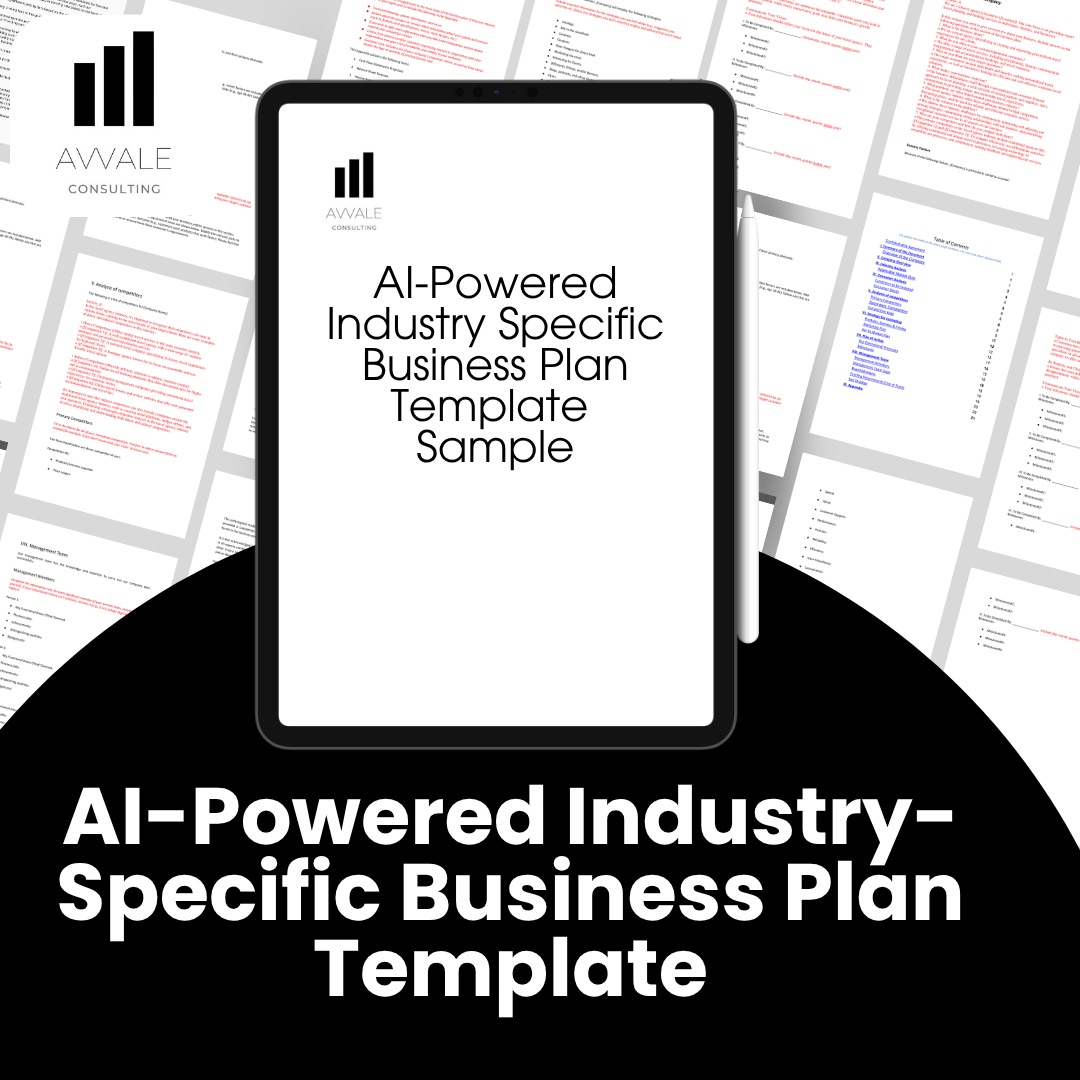
Holographic Business Plan Template
Plug-and-play structure. Ideal if you want to write it yourself.

Market Research & Content
We handle research & narrative. You get investor-ready copy.
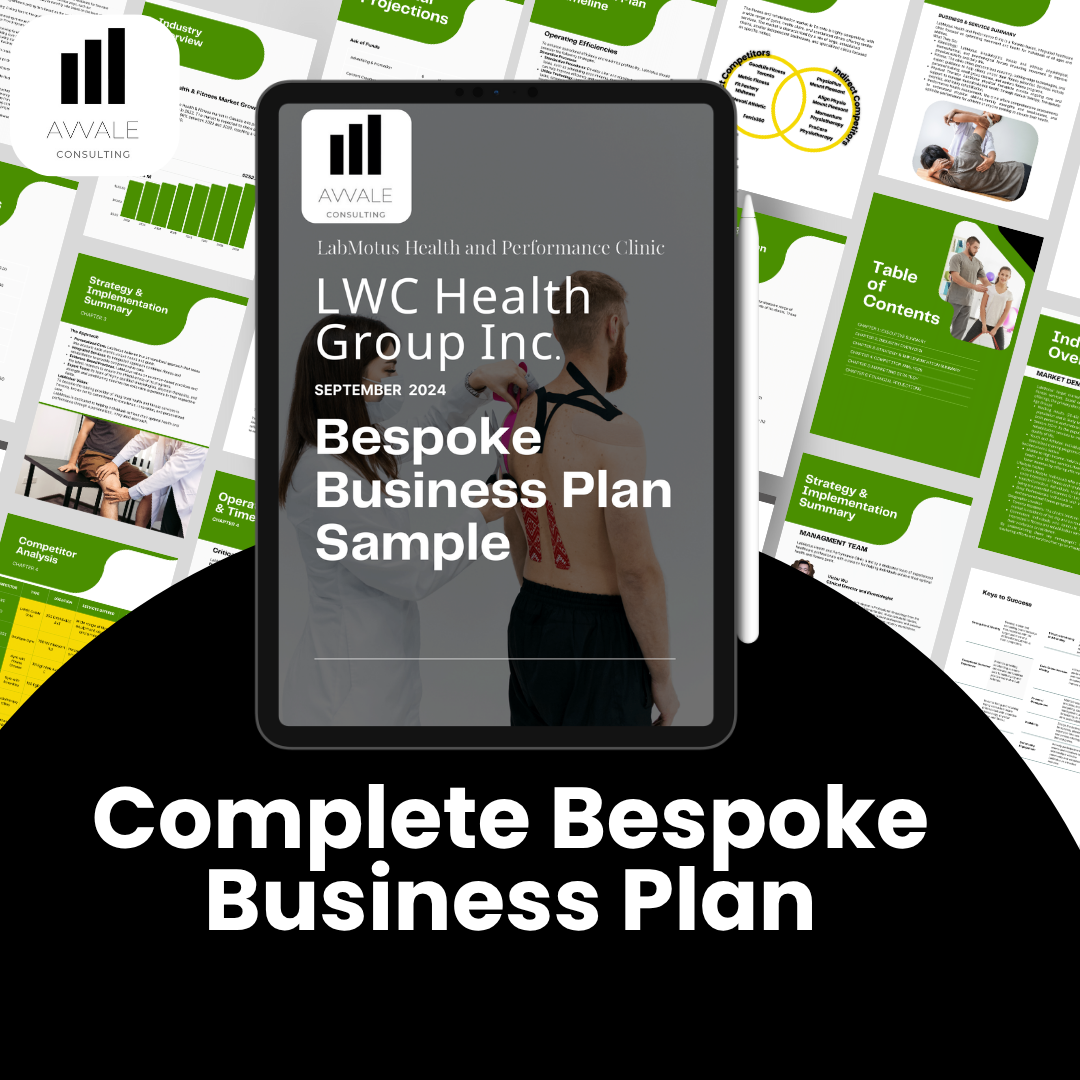
Bespoke Business Plan
Full plan + 5-year forecast. SBA, bank loan & investor ready.