Product Design Consultancy Business Plan Template
Product Design Consultancy Business Plan Template
Price by phase, protect your margin on revisions, and show lenders a break-even they can check. Download the free template or have our consultants build the plan.

Download Your Free Product Design Consultancy Business Plan Template
DIY template with step-by-step instructions. Editable Word doc — yours in 30 seconds.
Need more than a template? We'll do the work for you.
Industry-specific structure. Write it yourself with expert guidance.
Download TemplateWe handle the research & narrative — investor-ready copy in 3–4 days
Get StartedFull plan + 5-year forecast, written by our team in 10–14 days
Book a CallThe Product Design Consultancy Market in 2026
A product design consultancy sells a service that sits between an idea and a factory floor: research, concept sketching, industrial design, CAD, prototyping, design for manufacture, and the hand-off pack a supplier needs to quote. The buyers are start-ups with a funded idea, mid-sized manufacturers that have no in-house design team, and large brands that want an outside view on a new category. Before you write a single financial line, decide which of those three you are building the business for, because the day rates, sales cycles and contract risks differ sharply between them.
The broadest number comes from the UK Design Council. Its 2026 Design Economy report puts design's contribution at £136.7 billion in 2023, or 5.5% of UK gross value added, a 40% rise on 2019, large enough that design now out-earns the £114 billion retail sector (Dezeen reporting on the Design Council, 2026). The same release counts 2.27 million design jobs, up 15% since 2020, and one detail matters more to a consultancy founder than the headline: two-thirds of that value, £90.6 billion, is created by designers working inside manufacturing, engineering, healthcare, finance, retail and the public sector, not inside design firms (Design Council press release, August 2026). Put plainly, most design work is still done in-house. Your commercial opportunity is the share that companies decide to buy from outside, usually at the moment a project outgrows the permanent team or needs a skill the team lacks.
Four numbers, four definitions
Why the commercial market-size figures disagree by a factor of fifteen
Search for the size of the industrial design services market and you will find numbers from roughly $3 billion to roughly $49 billion for the same year. GII Research values narrowly defined industrial design services at USD 3.30 billion in 2025. Another analyst lists the industrial design market at about $49.3 billion in 2025 growing 6.3% a year, while a third puts it near $15 billion with a 7% growth rate. Precedence Research, using a wider product design and development services scope, projects $54.16 billion by 2035.
The gap is not an error. Each report draws the boundary differently: some count only fees paid to external studios, some add in-house design salaries, some include engineering and prototyping. A lender who asks where your market figure comes from will test exactly this. The credible way to write the market section is to quote the narrowest sourced number for the work you will actually sell, state its definition in one sentence, then show a bottom-up sizing: how many manufacturers and funded start-ups sit within travelling distance or within your niche, and what share of them buy outside design each year.
Where the growth is regional
The Design Council's regional breakdown shows design gross value added rising 88% in Wales, 67% in the North East of England and 32% in Scotland since 2019. For a founder choosing where to base a studio, that is a useful counterweight to the assumption that every consultancy must be in London. Lower rents and a thinner supply of studios in those regions can offset a smaller local client pool, provided your plan does not rely on walk-in work. Product design is a service you can sell remotely to a founder in Austin or a factory in Shenzhen, and the plan should say which share of revenue you expect from within 50 miles and which from beyond.
In the United States, the relevant classification is NAICS 541420, Industrial Design Services, defined by the Census Bureau as establishments primarily engaged in creating and developing designs and specifications that optimise the use, value and appearance of products. Third-party directories that compile Census data for this code list only about 170 employer companies, around 12,800 employees and roughly $2.3 billion in receipts. Treat those directory figures as indicative, because a count of this kind tends to miss the long tail of owner-operated studios. The useful reading is structural: the category is small, and its average firm is far smaller than the global names, so a well-positioned new entrant is realistic.
Who your plan is up against
Name your competitors in the plan, by tier. At the top sit global innovation firms such as IDEO and Fuseproject, led by Yves Béhar, which win large brand programmes and are not your competition for a £30,000 job. London-based multidisciplinary studios such as Pentagram, which has done product work alongside identity and packaging since 1972, Seymourpowell and Priestman Goode occupy the premium UK tier. Below them are hundreds of studios of two to twelve people, plus a growing set of digital-product consultancies such as Netguru and Grand Studio, which sell product design as UX, UI and service design instead of physical goods. A comparison list of the strategic design consultancies ranked in 2026 shows how crowded the digital end has become.
Your decision is whether to be a physical-product specialist (consumer hardware, medical devices, industrial equipment), a digital-product specialist, or a hybrid. Hybrids are the hardest to explain to a buyer in one sentence, and in our experience of reviewing plans, the ones that secure funding usually name one vertical first and treat the second as an expansion line in year two.
Funding Data: What Lenders Actually Offer a Design Studio
Design consultancies are an awkward fit for asset-backed lending. There is no stock, little equipment worth repossessing, and revenue arrives in lumpy project invoices. Lenders therefore underwrite the founder's track record and the quality of the forecast. These are the main routes, with the figures that will go into your funding table.
The British Business Bank Start Up Loans scheme offers £500 to £25,000 per applicant, unsecured, on a fixed rate of 7.5% from April 2026, with terms of one to five years and free mentoring for the first year. Many older guides, including earlier versions of this page, quote 6%; the rate changed on 6 April 2026, so check the current figure before you build a repayment schedule. If two directors apply, the business can raise up to £100,000 in total. A £25,000 loan at 7.5% over four years costs roughly £605 a month, which a three-person studio can carry once it has two retained clients, but not in month one.
In the United States, the SBA 7(a) programme guarantees loans up to $5 million, and a design consultancy realistically sits at the small end of it: $50,000 to $250,000 against a personal guarantee, with working capital as the stated use of proceeds. SBA lenders want to see two things in a design-studio plan. First, evidence that revenue is not concentrated, so a customer table showing no client above about 30% of forecast revenue helps. Second, a debt service coverage ratio comfortably above 1.25 once the founder's own salary is counted as a cost. A plan that treats founder pay as profit will fail the second test even if the first is clean.
Equity routes are less common for pure consultancies, because there is no obvious exit multiple on a services firm, but they do exist when the studio also develops its own products. A consultancy that retains royalties or takes equity from clients is partly a venture portfolio, and investors will want that stream modelled separately from fee income. We cover the structure in the fee-model comparison below.
Grant funding is regional and changes often. In the UK, Innovate UK competitions and local growth hubs occasionally fund product-development projects that a design studio can partner on as the design lead; in the US, state manufacturing extension partnerships sometimes subsidise prototyping for small manufacturers. Neither is a basis for a plan's core funding, but each is a legitimate source of project revenue to model as upside, and naming the specific programme you will apply to is the kind of detail that separates a researched plan from a template.
What It Costs to Open a Product Design Studio
Published startup-cost estimates for design studios run from almost nothing to six figures. One start-up directory puts a freelance or solo design consultant's launch spend between $100 and $1,000, with business formation at $50 to $500 and small-business insurance at $500 to $2,000 a year. A financial-modelling site that assumes a staffed studio arrives at about $115,899, of which $47,499 is three months of pre-opening wages. Both are right for the scenario they describe. A lender wants to know which scenario is yours, so this plan models two: a solo launch at about $16,000 and a three-person studio at about $69,000.
Where a $69,000 launch budget goes
Line by line
- Workstations ($3,800 solo, $10,500 for three): CAD and rendering punish weak hardware. Budget for a workstation-class machine with a dedicated GPU per seat, a calibrated monitor, and a pen display or tablet for sketching. Skimping here costs billable hours every week.
- Software ($2,900 solo, $9,800 for three): a parametric CAD package such as SolidWorks or Autodesk Fusion, a surface modeller such as Rhino, a renderer such as KeyShot, the Adobe suite, Figma if you touch screens, and a project tool. SolidWorks is the largest single line; Fusion is the usual cost-saving swap for early-stage studios.
- Prototyping kit ($1,400 solo, $7,200 for three): a desktop FDM printer, a resin printer for fine detail, finishing tools, and a bench. Anything bigger, such as CNC, injection-moulded or SLS parts, is sent to a bureau and recharged to the client, which keeps capital out of your balance sheet.
- Studio ($1,200 solo, $12,500 for three): the solo model uses three months of co-working; the three-person model assumes a small unit or shared workshop with a three-month deposit. If your clients are remote, this line can be cut by a third.
- Insurance ($1,500 solo, $4,800 for three): professional indemnity (errors and omissions in the US), public liability, and cover for your equipment. Manufacturers and larger brands often write minimum PI limits into supplier agreements, so price cover to the contracts you want to win.
- Legal and IP ($1,700 solo, $5,500 for three): incorporation, a master services agreement, a statement-of-work template, an IP-assignment clause, and trademark filing for the studio name.
- Brand and portfolio ($1,000 solo, $6,000 for three): professional photography of past work matters more than a bespoke site, because buyers judge a studio by its portfolio within about a minute.
- Cash buffer ($2,500 solo, $12,700 for three): design clients commonly pay on 30 to 60 day terms, and a studio carries salaries for the whole project. Six weeks of fixed costs is a floor, not a target.
The solo case in full: $3,800 + $2,900 + $1,400 + $1,200 + $1,500 + $1,700 + $1,000 + $2,500 = $16,000. In sterling, the same set comes to roughly £12,000 to £13,000 at current exchange rates, and £54,000 for the three-person model once UK software pricing and VAT-registered purchases are accounted for. Whether you fund it from savings, a Start Up Loan, or a mix, the plan should show the founder's own contribution explicitly, because lenders treat it as evidence of commitment.
The runway number most plans omit
The startup budget above covers equipment and set-up, not the months before revenue. A solo founder leaving a salaried design job typically needs three to six months of personal living costs on top, and a three-person studio needs its payroll covered until the first deposits arrive. A plan that shows $69,000 of launch spend and no payroll runway is describing a business that is out of cash in month three. State the runway in months and show where it comes from.
Three Ways to Get Paid: Retainer, Fixed Fee, or Royalty
How the studio charges decides almost everything else in the plan: cash-flow shape, hiring pace, risk, and what an investor can value. Published price ranges give the outer limits. Design agencies charge hourly rates of $75 to $500, flat project fees from $5,000 to $150,000 and above, or monthly retainers from $3,000 to $15,000 and above. Freelancers bill about $50 to $150 an hour, boutique agencies $100 to $200, and established agencies $100 to $300 or more, according to Clutch's pricing guide. Senior product designers on contract are quoted at $140 to $260 an hour in the same market scans, and one industrial design firm cites a full span of $40 to $400 an hour depending on location, size and reputation.
| Model | Typical shape | Cash flow | Main risk |
|---|---|---|---|
| Phase-based fixed fee | $20K-$150K per project, billed in 3 to 4 milestones | Lumpy; deposit of 30-50% smooths month one | Scope creep eats margin |
| Monthly retainer | $3K-$15K+ a month for a block of hours or a design sprint cadence | Predictable; the best lever for loan repayments | Client treats hours as unlimited; renewal risk |
| Reduced fee plus royalty or equity | 30-60% of normal fee up front, plus a per-unit royalty or a small equity stake | Thin early; potentially large later | The product may never ship; revenue recognition is uncertain |
Phase-based fixed fee: the default for a reason
Most studios settle on fixed fees split into phases: research and brief, concept, detail design and CAD, then prototype and hand-off. Each phase has its own deliverable and its own invoice, and the contract states how many revision rounds are included. The client gets a number they can take to their own investors; the studio gets a natural checkpoint to renegotiate when the brief changes. The danger is under-scoping. The worked example in the revenue section below shows how three unbilled revision rounds on a $96,000 job cut contribution margin from about 31% to about 19%.
Retainers: the funding-friendly model
A retainer buys a fixed block of design capacity each month. It suits clients with a continuing roadmap, such as a hardware company shipping a new colourway and accessory every quarter. For a business plan, retainers matter because lenders can see a contracted revenue floor. Two retainers at $6,000 a month cover $144,000 a year of revenue before any project work, and in the three-person model below that is enough to cover roughly 44% of annual fixed costs. The trade-off is discipline: a retainer without a written hours cap becomes unpaid work.
Royalty and equity: high variance, treat separately
Taking a reduced fee in exchange for royalties or equity is common with first-time inventors who cannot afford full rates. One industry explainer notes that the model is favoured when a founder wants a partner willing to commit to the idea, and that royalties on a successful product can reach three times the development fees, but that established firms with a track record usually avoid it because the work is short and the payoff is long. Both halves of that statement belong in your plan. A sensible policy is to cap royalty-linked work at a fixed share of studio capacity, say 15%, and to forecast it at zero in the base case so that any income is upside rather than a loan-repayment assumption.
Revenue, Utilisation and Margin: The Maths That Decides Survival
A product design consultancy sells hours. Everything in the financial model flows from how many of the hours you employ are billable, and at what rate. Start with capacity. A UK designer on a 37.5-hour week with 28 days of leave and bank holidays has about 1,740 working hours a year. At 65% utilisation, that is 1,131 billable hours, which at a $150 blended rate produces $169,650 of revenue per designer. At 55% utilisation it is 957 hours and $143,550. Ten percentage points of utilisation is worth about $26,000 per head per year, which is why studios obsess over it and why your plan should state its assumption openly.
Break-even for a three-person studio
Assume a founder-principal and two designers, with total fixed costs of $27,500 a month, or $330,000 a year, including all three salaries, on-costs, rent, software, insurance and marketing. Break-even revenue at a $150 blended rate requires 2,200 billable hours. The studio's total capacity is 3 x 1,740 = 5,220 hours, so the break-even utilisation is 2,200 / 5,220 = 42%. That is a comfortable margin of safety if the studio can sell 60% of its time, and a dangerous one if the pipeline stalls for a quarter. A line in the plan showing monthly utilisation targets for the first 18 months, with a trigger point at which you stop hiring, is the single most persuasive operating detail you can give a lender.
One 14-week, $96,000 engagement
The engagement splits into four invoices: research and brief ($12,000, two weeks), concept design ($24,000, four weeks), detail design and CAD ($32,000, five weeks), and prototype and manufacturer hand-off ($28,000, three weeks). That totals $96,000 over 14 weeks. At 640 hours across the team, the effective rate is $150. Labour at a loaded internal cost of $62 an hour comes to $39,680, leaving a gross margin of $56,320, or 58.7%. Allocate overhead at 28% of revenue ($26,880) and the contribution is $29,440, or 30.7%.
Now add the typical failure. A client requests three extra rounds of revisions after concept sign-off, each consuming 24 hours at $150 equivalent ($3,600 a round) and none of it billed. That is $10,800 of lost margin, and contribution drops to $18,640, or 19.4%. Nothing about the design quality improved; the studio simply worked 72 hours for free. The remedy is contractual: a defined number of rounds per phase, a change-order rate card, and a rule that the project lead raises a change order within 48 hours of any out-of-scope request.
Secondary revenue streams worth modelling
- Design sprints and workshops: two- to five-day fixed-price engagements, often $8,000 to $25,000, that act as a low-risk entry point and feed the main pipeline.
- Manufacturing management: a fee of 5% to 10% of tooling or first-run value for supervising suppliers, sampling and pre-production checks.
- Prototype recharges: pass-through of bureau costs, with a 10% to 15% handling margin, shown separately from fee revenue so it does not distort utilisation.
- Design audits: a short paid review of an existing product's usability, manufacturability and cost-down opportunities, priced between $3,000 and $10,000.
- Licensed designs: where the studio keeps rights to a self-initiated product, royalty income that should be forecast as an upside line.
Concentration: the line investors check first
A studio with one anchor client at 45% of revenue has a customer, not a business. Show the revenue forecast by client tier: how many projects above $75,000, how many between $25,000 and $75,000, how many under $25,000, and which proportion is retainer. Aim for no single client above 30% by month 18, and explain what the studio will do if its largest client delays a project by a quarter. That discussion belongs in the risk section, but the numbers belong here.
Pricing for the studio you are, not the freelancer you were
Founders who leave an in-house role often price at their old salary divided by working hours, which gives a rate that fits a freelancer and fails a studio. A studio carries rent, software, insurance, non-billable business development and holiday cover. Work backwards from the break-even maths above: if utilisation tops out at 65% and overhead runs at 28%, a $62 loaded labour cost needs a billing rate near $150 to deliver a 30% contribution. Quoting $90 an hour because it matches what you charged as a contractor will fill your diary and still lose money.
IP, Product Safety and Contract Rules for Design Studios
A product design consultancy needs no trade licence in most places. The legal exposure sits in three areas: who owns what you create, who is responsible when a product you designed hurts someone, and how you classify the people who work for you. A plan that addresses all three reads as written by an operator.
United Kingdom: design rights and the IPO
Design protection in the UK comes in two layers. Unregistered design right arises automatically and, according to Harper James, lasts for 10 years after the design was first sold or 15 years after it was created, whichever ends first. Registered design protection is stronger and easier to enforce: the UK IPO fee is £50 for one design plus £20 for each additional batch of up to 10 designs in the same application, and protection runs up to 25 years provided a renewal fee is paid every five years. For a client launching a consumer product, a £50 registration is trivially cheap next to a £15,000 tooling bill.
The important point for a consultancy is ownership. Under UK law, absent a written assignment, the commissioning client does not automatically own all design rights in work you create; your contract must assign them, ideally on final payment. Your plan should state that every statement of work includes an assignment clause triggered by full payment, a licence for pre-existing studio materials such as your own parametric libraries, and a portfolio-use right so you can show the work. The same plan should be honest about turnaround: registered design applications are usually examined within a few weeks, which fits a pre-launch schedule only if filing happens before the product is publicly shown.
On the tax side, UK clients who use your staff as contractors may fall under the off-payroll working rules known as IR35, and if you hire freelance designers to fill peaks you need a clear view of whether their engagement looks like employment. Budget for an accountant's opinion on status early, not after a letter from HMRC.
United States: design patents and contractor classification
US protection for the appearance of a product comes through a design patent, which lasts 15 years from grant. USPTO filing, search and examination fees rose in the last fee schedule: roughly $520 for a small entity and $1,300 for a large entity, with issuance fees on top at the same levels. Utility patents, which cover how a product works, cost about $800 small-entity for filing, search and examination alone, before attorney fees that commonly reach several thousand dollars. Studios rarely file on a client's behalf; instead they supply the drawings, a dated design record and a written assignment, and recommend patent counsel. Your plan should show that referral relationship as a source of leads, not a cost.
The practical US obligations are state-level: an LLC or corporation, any city business licence, sales tax treatment of deliverables (physical prototypes are often taxable; design services often are not, and the rules differ by state), and correct classification of freelancers under IRS and state tests. A studio that treats a six-month full-time freelancer as a contractor invites reclassification.
European Union: the GPSR and who counts as the manufacturer
If your clients sell physical products into the EU, the General Product Safety Regulation (EU) 2023/988 applies to them, and it has been in force since 13 December 2024. It defines a manufacturer as anyone who makes a product, or commissions a third party to design and make it, and sells it under their own name or trademark. Manufacturers must carry out an internal risk analysis, hold technical documentation for ten years after the product reaches the market, and provide safety information. A person who substantially modifies a product also becomes a manufacturer.
For a design consultancy the regulation points to a contract clause rather than a licence. In most engagements your client, not the studio, is the manufacturer, and your statement of work should say so, specify that the client owns the risk assessment, and set out what safety inputs the studio supplies, such as material selection notes, drop-test criteria and a design-intent record. Studios that also sell their own products, or that take equity and effectively steer a product line, face a different position and should take advice. Post-Brexit, UK sellers use the UK's own product safety rules and UKCA or CE marking as applicable, so a client selling in both markets needs a compliance plan that covers each.
Insurance and liability caps
Professional indemnity should be sized to the contracts you target. Many manufacturers ask for £1 million or $1 million of cover as a minimum, and larger accounts ask for £5 million. Cap your own contractual liability at the fees paid under the relevant statement of work, exclude consequential loss, and state that testing and certification remain the client's responsibility. A lender will read your insurance paragraph; one short sentence naming limits and the contract cap is usually enough.
Five Mistakes That Sink New Design Consultancies
1. Giving away revision rounds
The worked example above shows the cost: three free rounds turned a 31% contribution into 19%. New studios fear sounding rigid and leave the number of rounds blank. Clients then use as many as they want, because designers are polite and the work is subjective. Write the limit into the statement of work, make the change-order process routine, and treat it as a service to the client, who gets a predictable budget.
2. No IP assignment and no ownership record
Disputes over who owns a form, a mechanism or a material choice tend to surface when a client is raising money or being acquired, which is the worst possible moment. Keep dated design records, assign on payment, and carve out your own pre-existing tools and libraries in writing.
3. Pricing at freelancer rates with studio costs
A founder who bills $80 an hour but carries software licences, a workshop and insurance subsidises clients from savings. Use the break-even calculation, include 28% for overhead, and test the rate against the sources above: boutique studios are quoted at $100 to $200 an hour in market scans, and a rate below that band tells buyers you are a freelancer or a discounter.
4. One client, one sector
A studio whose revenue depends on a single hardware client has no negotiating power at renewal and no resilience if that client's funding round slips. Plan for at least three active clients by month six and a retainer share of 25% to 35% of revenue by month eighteen, with a second vertical in the pipeline.
5. Ignoring manufacturing reality
Beautiful concepts that cannot be moulded, assembled or sourced within the client's cost target damage reputation. Build a design-for-manufacture review into the detail-design phase, keep a short list of bureaux and toolmakers you trust, and be ready to say which processes, such as injection moulding, die casting, sheet-metal fabrication or additive manufacturing, you design for with confidence and which you subcontract.
Sample Plan Extract: Falk Product Studio
The extract below shows how the numbers in this guide translate into the first pages of a plan. The studio is a composite, and the figures reuse the assumptions already stated above so you can trace each one back to its derivation.
Falk Product Studio: Bristol, United Kingdom
Business. Falk Product Studio designs consumer hardware and small medical devices for funded start-ups and mid-sized manufacturers across the South West and Wales. Services run in four phases from research to manufacturer hand-off, sold as phase-based fixed fees, with a monthly retainer for clients who need continuing design capacity.
Founder. A former in-house industrial designer with nine years of experience in a household-appliance manufacturer, three shipped products and two granted registered designs.
Funding sought. £36,000: a £22,000 Start Up Loan at a fixed 7.5% over four years, plus £14,000 of founder savings, used for equipment, software, studio deposit, insurance and a six-week cash buffer.
Targets. Utilisation of 45% in months 4 to 6, 55% by month 12 and 62% by month 18. Break-even utilisation of 42% on fixed costs of £22,000 a month once the first hire starts. No client above 30% of revenue by month 18. Retainer share of 25% by month 18.
Utilisation-driven forecast
One founder plus a part-time designer from month seven. Year-one revenue grows from £3,200 in month one to £21,000 in month twelve.
Retainer share and runway
Debt service coverage of 1.6 times after founder pay, with two retainer clients and one phase-based client above £60,000.
Inside the Product Design Consultancy Template
The Avvale template is a Word document structured for a services business with project-based revenue. It is organised so that each section answers a question a lender or investor will ask, and it carries prompts specific to design studios instead of generic headings. The free version contains the full outline with guidance notes; the $5 version adds industry-specific worked examples and a pre-built financial layout; the research and bespoke tiers are done for you.
- Executive summary: one page stating the vertical, the fee model, funding sought, and the three numbers a lender looks for first: utilisation target, break-even point and client concentration.
- Services and process: the four-phase delivery model, deliverables per phase, revision limits and change-order rules.
- Market and clients: bottom-up sizing by client tier, the competitive set by tier, and a pipeline table.
- Pricing: blended rate derivation from loaded cost, overhead allocation and target contribution, with a comparison to published market bands.
- Operations: studio, workshop and tooling, software stack, bureau and manufacturing partners, and quality review points.
- Team and hiring: founder credentials, first-hire trigger tied to utilisation, freelancer policy and IR35 or contractor status notes.
- IP and risk: assignment clause, design-right strategy, manufacturer-status wording, insurance limits and liability cap.
- Financial plan: 36-month forecast, break-even chart, cash-flow with 30 to 60 day payment terms, loan schedule and sensitivity on utilisation and rate.
- Funding request and use of proceeds: structured for UK Start Up Loan, SBA 7(a) and private investor formats.
If you prefer not to write the financial model yourself, our Research + Content package covers the market, competitor and narrative sections, and the Bespoke Business Plan adds the full five-year forecast. For general layouts across industries, see the free business plan templates and our business plan writing service. Related studio guides include the industrial design studio business plan template and the interior design consultancy business plan template.
How a Bristol Studio Replaced Hourly Billing and Secured a Start Up Loan
A former in-house industrial designer in Bristol came to Avvale with a clear idea and no plan: design small hardware products for funded start-ups. Her first draft priced work at £55 an hour, which matched her contracting rate and lost money once rent and software were included. We rebuilt the plan around phase-based fixed fees, a derived blended rate, a break-even utilisation of 42% and a retainer product for clients with continuing roadmaps. The new plan asked for a £22,000 Start Up Loan alongside £14,000 of her own savings, and set a trigger for her first hire at 55% sustained utilisation.
By month ten the studio had three people, two retainer clients and one fixed-fee project above £60,000. The founder credits the revision-round clause for protecting margin on the first big job.
Composite based on real Avvale client outcomes. Name and identifying details changed for confidentiality.
Read the full creative media case study →More real examples are in our case studies library.

Questions Founders Ask Before Opening a Design Studio
How much does it cost to start a product design consultancy?
How do product design consultancies charge clients?
Who owns the IP in work a product design consultancy creates for a client?
Is a product design consultancy the same as an industrial design studio?
What do lenders look for in a product design consultancy business plan?
What funding options are available for product design consultancies?
How long does it take to get a professional product design consultancy business plan?
Get Your Product Design Consultancy Business Plan
Choose the level of support that fits your stage and budget.

Product Design Consultancy Business Plan Template
Plug-and-play structure. Ideal if you want to write it yourself.

Market Research & Content
We handle research & narrative. You get investor-ready copy.
Bespoke Business Plan
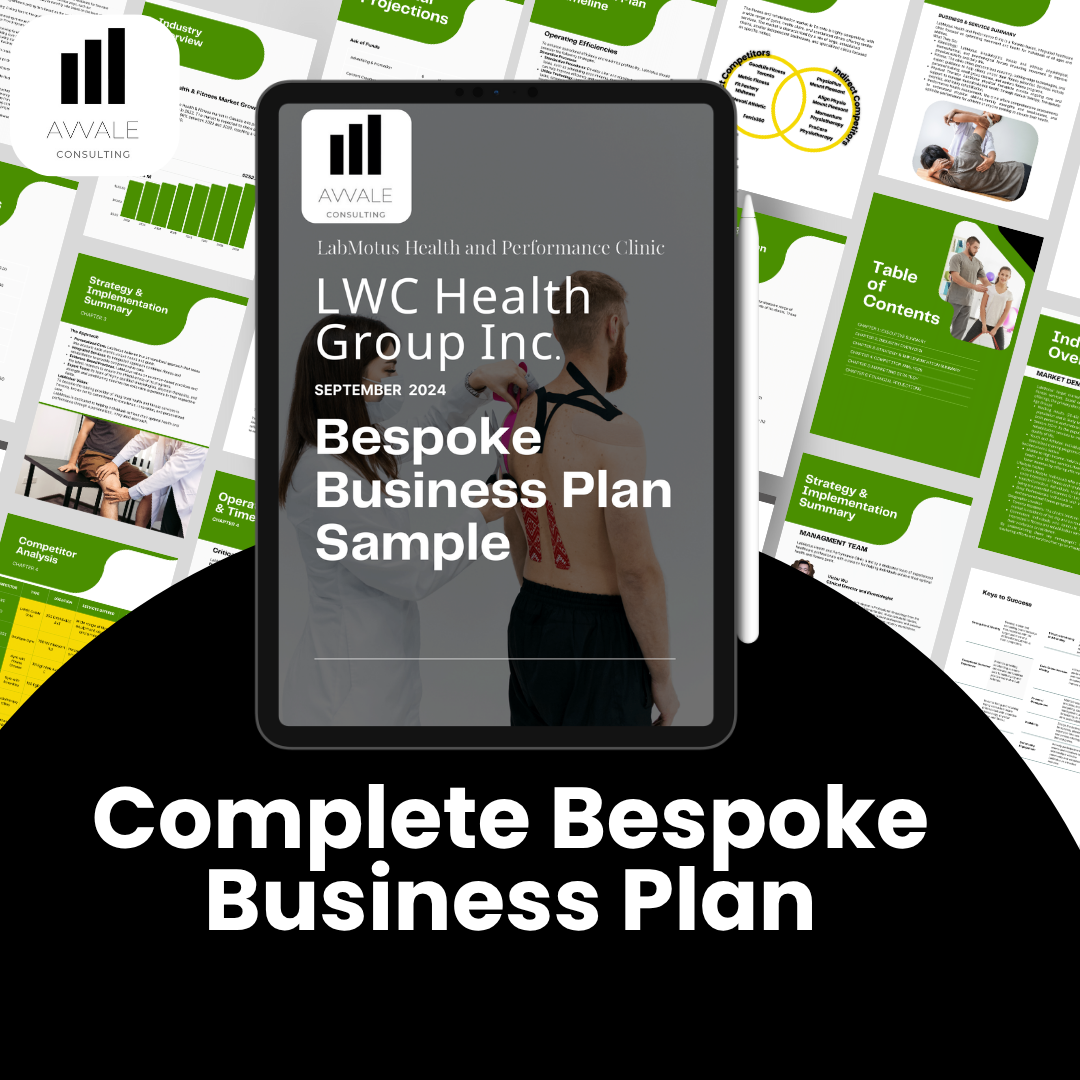
Full plan + 5-year forecast. SBA, bank loan & investor ready.